
Increase Customer Lifetime Value:
Revenue Optimization Through Better
Retention
Stop chasing new customers at the expense of existing ones. Master proven strategies to
increase customer lifetime value, boost retention, and maximize revenue per customer with
calculators and frameworks that work.
8+
Revenue Strategies
5
Free Templates
2x
LTV Potential
The Revenue Paradox: Acquisition vs. Retention
The Acquisition Treadmill
Constantly chasing new customers while existing ones churn. Acquisition costs 5-25x more than retention, yet most businesses pour 80% of marketing budget into new customer acquisition instead of keeping the ones they have.
The Leaky Bucket
High churn rates that drain profitability and growth potential. When customer lifetime value is low, you can't afford the acquisition costs needed to scale—creating a vicious cycle of slow growth and tight margins.
The Retention Engine
Build sustainable growth by maximizing the value of every customer relationship. Increase LTV through retention, upsells, pricing strategy, and loyalty programs—turning customers into your most profitable marketing channel.
Calculate Your Customer Lifetime Value
Understanding your current LTV is the first step to improving it. Our calculator helps you
measure and track the metrics that matter most.
Customer Lifetime Value Calculator
Calculate your LTV, CAC ratio, and identify opportunities to increase revenue per customer.
Over 4,500 businesses have used this calculator to understand and improve their customer economics.
Get your LTV score in 10 minutes.
Your Revenue Optimization Framework: From Retention to Growth
Follow this proven 5-lever framework to double your customer lifetime value.
IMPROVE RETENTION & REDUCE CHURN
✅ Measure churn rate and identify why customers leave
✅ Implement proactive customer success programs
✅ Create onboarding systems that drive early engagement
✅ Build feedback loops to address issues before churn
INCREASE AVERAGE ORDER VALUE
✅ Implement strategic upsell and cross-sell programs
✅ Create product bundles and package offerings
✅ Train team on consultative selling techniques
✅ Use data to personalize recommendations
OPTIMIZE PRICING STRATEGY
✅ Analyze current pricing against value delivered
✅ Test value-based pricing models
✅ Implement strategic price increases without losing customers
✅ Create tiered pricing for different customer segments
BUILD RECURRING REVENUE
✅ Develop subscription or membership models
✅ Create maintenance and service contracts
✅ Build consumable product lines for repeat purchases
✅ Implement auto-renewal and continuity programs
SEGMENT & PERSONALIZE
✅ Identify your most profitable customer segments
✅ Measure satisfaction with Net Promoter Score (NPS)
✅ Build loyalty programs that reward high-value behaviors
✅ Personalize marketing and offers based on customer data
Complete Customer Value Resource Library
From retention strategies to pricing optimization, these guides cover every lever for
increasing customer lifetime value.
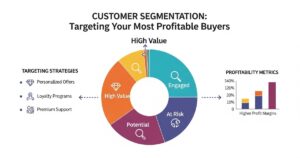
Customer Segmentation: Targeting Your Most Profitable Buyers
You know the feeling. You are spending money on ads. You are posting on social media. You are sending emails.
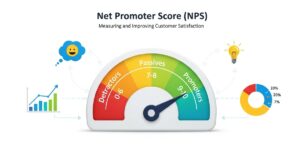
Net Promoter Score (NPS): Measuring and Improving Customer Satisfaction
We all want happy customers. We want 5-star reviews, glowing testimonials, and people shouting our brand name from the rooftops.
Creating Recurring Revenue: Subscription Model Fundamentals
There is a reason Netflix, Spotify, and even your local car wash want you to subscribe. It is not just
Pricing Strategy for Growth: When and How to Raise Prices
Let’s talk about the scariest email you will ever send. It is the one with the subject line: “Important Update
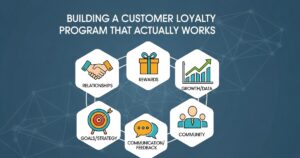
Building a Customer Loyalty Program That Actually Works
You have worked hard to get your customers. You paid for the ads, you built the website, you delivered the
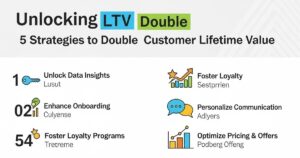
Unlocking LTV: 5 Strategies to Double Your Customer Lifetime Value
In the high-stakes world of modern business, there is an obsession with the “new.” New leads. New clicks. New signups.

The Art of the Upsell: Increasing Average Order Value Without Being “Pushy.”
There is a fine line between a “Helpful Expert” and a “Pushy Salesperson.” We have all met the latter. You
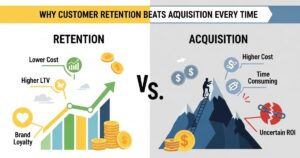
The Growth Engine: Why Customer Retention Beats Acquisition Every Time
There is an addiction in the business world, and it is fueled by the “Closed Won” notification. For decades, the
Free Customer Value Templates & Tools
Get instant access to our complete library of LTV calculators, pricing worksheets, and
revenue optimization templates no signup required.
LTV Calculator
Calculate customer lifetime value, CAC ratio, payback period, and LTV:CAC ratio with automatic formulas and benchmarks.
Pricing Strategy Worksheet
Analyze your current pricing, test value-based models, and plan strategic price increases with customer impact analysis.
Customer Loyalty Program Template
Design points-based, tier-based, or value-based loyalty programs with program economics and ROI projections.
Upsell Script Library
Proven upsell scripts for 10 common scenarios—consultative, non-pushy approaches that increase AOV by 20-40%.
Customer Segmentation Matrix
RFM (Recency, Frequency, Monetary) analysis template to identify and target your most profitable customer segments.
Continue Your Growth Journey
Funding & Capital Strategy
Improved LTV metrics make fundraising easier—show investors sustainable unit economics and growth potential.
Strategic Planning & Goal Setting
Set quarterly OKRs around LTV, retention, and revenue per customer to drive systematic improvement.
Market & Geographic Expansion
Higher LTV provides the margin needed to fund expansion into new markets and locations profitably.
Team Building & HR Foundations
Build customer success teams focused on retention, loyalty, and lifetime value maximization.
Frequently Asked Questions About
Customer Lifetime Value
What is customer lifetime value (LTV) and why does it matter?
Customer lifetime value is the total revenue you can expect from a customer over the entire relationship. It matters because it determines how much you can spend to acquire customers (CAC) while staying profitable. A healthy LTV:CAC ratio is 3:1 or higher—meaning each customer generates 3x what you spent to acquire them. Higher LTV means more marketing budget, faster growth, and better unit economics.
How do I calculate customer lifetime value?
Simple LTV formula: (Average Purchase Value × Purchase Frequency × Customer Lifespan). For example: If customers spend $100/month, buy 12 times/year, and stay for 3 years: LTV = $100 × 12 × 3 = $3,600. For subscription businesses: (Monthly Recurring Revenue × Gross Margin %) / Monthly Churn Rate. Use our LTV calculator template for automatic calculations with your specific metrics.
What's a good LTV:CAC ratio?
Target 3:1 or higher (each customer generates 3x their acquisition cost). Ratios below 1:1 mean you lose money on every customer. 1:1-3:1 is break-even to marginal. 3:1-5:1 is healthy and sustainable. Above 5:1 suggests you should invest more in acquisition to capture market share faster. Also consider payback period—aim to recover CAC within 12 months.
How can I increase customer lifetime value?
Five proven levers: (1) Increase retention—reduce churn through better onboarding and customer success, (2) Increase purchase frequency—email marketing, subscriptions, auto-replenishment, (3) Increase average order value—upsells, cross-sells, bundles, (4) Increase margins—raise prices or reduce costs, (5) Increase referrals—turn customers into acquisition channels. Focus on retention first—a 5% increase in retention can increase profits by 25-95%.
When should I raise prices without losing customers?
Raise prices when: (1) You haven’t increased in 2+ years, (2) Your value has increased significantly, (3) Demand exceeds capacity, (4) Your margins are too thin to scale, (5) Competitors charge more for similar offerings. How: Grandfather existing customers, introduce premium tiers first, communicate value not just price, test with new customers first, increase 10-20% at a time. Most businesses lose fewer customers than feared—often under 5%.
How do I build a successful customer loyalty program?
Successful loyalty programs: (1) Reward behaviors that drive LTV—repeat purchases, referrals, reviews, not just points for spending, (2) Make rewards achievable—customers should earn something within 2-3 purchases, (3) Create emotional connection—VIP tiers, exclusive access, community, (4) Keep it simple—complex programs confuse and disengage, (5) Measure program ROI—track incremental revenue vs. discount costs. Focus on value, not just discounts.
Ready to Maximize Customer Value?
Start with our LTV Calculator to understand your baseline. Then use our Pricing Worksheet
and Upsell Scripts to implement strategies that double your customer lifetime value.