Navigating Employment Laws as a Small Business Owner
Starting a small business is exciting, filled with dreams and hard work. But, it also comes with the challenge of employment laws. A local café owner, eager to serve her community, found out that just being enthusiastic wasn’t enough. She had to deal with the complex world of labor regulations.
Following these laws is not just about keeping the business running. It’s about making sure everything is fair and respecting employee rights. Not knowing the laws can lead to big problems. But, understanding them helps protect your business and creates a better work environment.
This article will help small business owners learn about employment laws. We’ll cover why HR compliance is key and how to make a supportive workplace. It’s all about keeping your business safe and your employees happy.
Key Takeaways
- Comprehending employment laws is crucial for safeguarding your business and employees.
- Understanding labor regulations helps prevent legal issues and protects employee rights.
- Establishing effective HR compliance strategies is essential for a harmonious workplace.
- Knowledge of employee rights fosters a culture of respect and fairness.
- Regular training and clear policies can streamline compliance with employment laws.
Understanding Employment Laws for Small Business
Small business owners need to know their legal duties in employment laws. It’s key for making smart choices and managing risks. With the right info, businesses can avoid big problems and create a fair work place.
Importance of Comprehending Legal Responsibilities
Knowing the law helps small business owners stay out of trouble and avoid big fines. They can make rules that follow HR standards. Not knowing the law can cause big problems, harm their reputation, and cost a lot of money.
Key Areas of Employment Law
There are important parts of employment law that small businesses must follow. Knowing these helps them stay in line:
- Wage and Hour Laws: These rules cover minimum wage, overtime, and keeping work records.
- Workplace Safety Regulations: These are set by OSHA to keep the work place safe.
- Anti-Discrimination Laws: These laws protect workers from unfair treatment based on race, color, religion, sex, or where they’re from.
Labor Regulations Every Small Business Owner Should Know
Every small business owner needs to know about labor regulations. It’s important to understand both federal and state laws. This helps avoid legal problems and ensures you follow the rules.
This section will cover key federal laws, state-specific rules, and local ordinances. These can all impact how your business operates.
Overview of Federal Labor Regulations
Federal laws set the minimum for wages, safety, and employee rights. The Fair Labor Standards Act (FLSA) is a major one. It deals with minimum wage, overtime, and rules for young workers.
Knowing these laws is crucial. It helps protect your employees and your business.
State-Specific Labor Laws
State laws add to the federal baseline. They can offer more protections or have different rules. It’s vital for small business owners to check their state’s laws.
These laws might cover things like benefits, leave policies, and work hours. You might need to adjust your business to meet these state laws.
Impact of Local Ordinances
Local laws can add more rules to follow. They might raise the minimum wage, require paid sick leave, or set safety standards. It’s important for small business owners to keep up with these changes.
Essential HR Compliance Strategies
For small business owners, making sure HR rules are followed is key. It helps create a good work place and keeps legal troubles away. Having clear rules and training employees is crucial.
Creating Employment Policies
Small businesses need to make detailed employment policies. These should cover things like how to act at work, showing up on time, and staying safe. The Society for Human Resource Management (SHRM) offers great help in making these policies.
Training and Education for Employees
Training should match the policies your business has. It’s important to teach about laws like anti-harassment and safety. Using fun and interactive ways to teach can make sure employees remember what they learn.
| Policy Area | Focus Points | Training Frequency |
|---|---|---|
| Workplace Conduct | Behavior expectations, respect | Annually |
| Safety Procedures | Emergency protocols, equipment usage | Quarterly |
| Anti-Harassment | Policy overview, reporting procedures | Biannually |
Employee Rights and Protections
Employees have many rights and protections under employment laws. It’s important for both employers and employees to know these rights. This helps keep the workplace respectful and follows the law.
Employers need to understand the value of employee benefits. They must also address workplace discrimination and follow wage and hour laws.
Understanding Employee Benefits
Employee benefits are key to attracting and keeping good workers. These can include health insurance, retirement plans, and paid time off. They help make employees happy and satisfied.
The Affordable Care Act sets standards for health coverage. Employers must know what benefits they must offer.
Addressing Workplace Discrimination
Discrimination in the workplace is harmful and can make the work environment toxic. The Civil Rights Act protects against discrimination based on race, color, religion, sex, or national origin. Employers should have strong policies and training to create an inclusive workplace.
This ensures all employees feel valued and respected.
Rights Regarding Wage and Hour Laws
Wage and hour laws are important for employee rights. Knowing about minimum wage and overtime pay is crucial for following the law. Employees deserve fair pay for their work.
Employers must follow these rules to avoid legal problems.
| Employee Rights | Description |
|---|---|
| Employee Benefits | Health insurance, retirement plans, and paid leave that contribute to employee welfare. |
| Workplace Discrimination | Protection from unfair treatment based on race, gender, or religion as outlined in the Civil Rights Act. |
| Wage and Hour Rights | Entitlement to minimum wage and overtime pay to ensure fair compensation in the workforce. |
Navigating Employment Contracts and Agreements
It’s key for small business owners to know about employment contracts. These agreements set out the rules for the employer-employee relationship. They make sure everyone knows their roles and duties. This helps avoid legal issues and keeps the workplace smooth.
Types of Employment Contracts
There are many types of employment contracts. Each one fits different business needs and work setups. Here are the main ones:
- At-will Contracts: These let either side end the job anytime, without reason.
- Fixed-term Contracts: These have a set end date, great for jobs that last a certain time.
- Independent Contractor Agreements: These are for freelancers or outside workers, making it clear they’re not employees.
Key Elements in Employment Agreements
Employment agreements should have important details to be clear and fair. Key points to include are:
- Job Responsibilities: Make sure everyone knows what’s expected to avoid confusion.
- Compensation Details: Talk about pay, benefits, and bonuses to keep things transparent.
- Grounds for Termination: List when the job can end, making sure it’s fair to both sides.
Creating detailed employment contracts is good for HR rules. It makes the workplace better, keeps employees happy, and reduces risks.
| Type of Contract | Duration | Termination Clause | Common Use |
|---|---|---|---|
| At-will Contract | Indefinite | No cause required | General employment |
| Fixed-term Contract | Specific period | End of term or cause | Project-based roles |
| Independent Contractor Agreement | Varies | Specified conditions | Freelance or contract work |
Managing Employee Classifications and Status
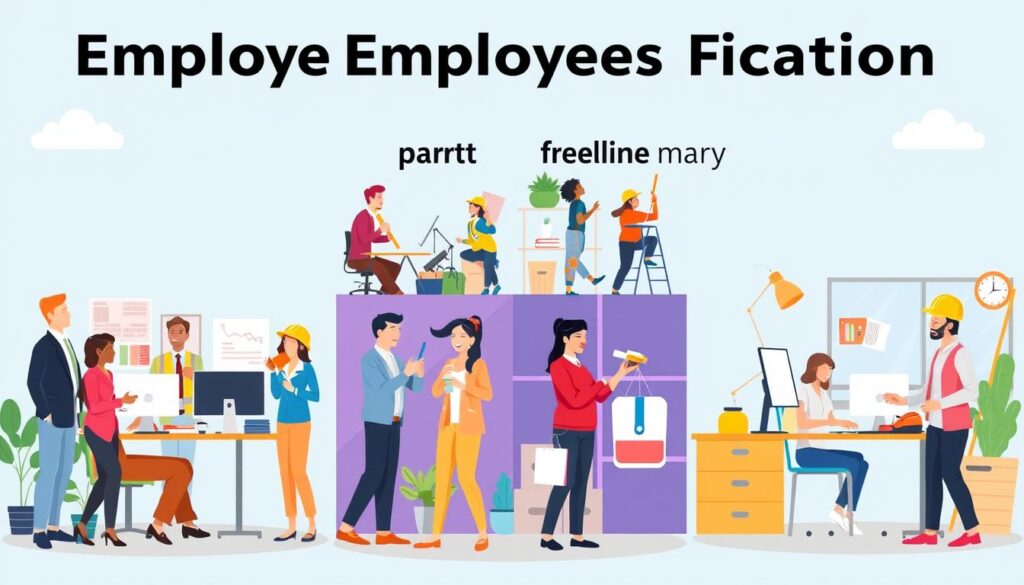
For small business owners, managing employee classifications is key. It’s important to know the difference between employees and contractors. This helps avoid legal issues and keeps tax rules in check. Getting it wrong can result in big penalties.
Differentiating Between Employees and Contractors
It’s vital to understand the differences between employees and contractors. Employees work regularly and follow their employer’s directions. Contractors work on their own, with their own schedule and clients. Knowing these differences helps with taxes and benefits.
Implications for Tax and Benefits
Taxes and benefits change a lot between employees and contractors. Employers handle taxes for employees, including Social Security and Medicare. Contractors pay their own taxes, including self-employment tax. Benefits like health insurance also vary, with employees usually getting them and contractors not.
| Aspect | Employees | Contractors |
|---|---|---|
| Tax Responsibilities | Employer withholds taxes | Responsible for own taxes |
| Benefits Eligibility | Entitled to benefits | No benefits entitled |
| Work Structure | Works under employer directions | Operates independently |
| Job Security | Generally more secure | Less job security |
Addressing Employee Complaints and Grievances
Handling employee complaints is key to a positive work environment. Small business owners need to set up clear grievance procedures. This makes it safe for employees to share their concerns.
A clear process builds trust and encourages solving problems together. It’s important to communicate well and be open.
Establishing a Complaint Procedure
A good complaint procedure helps employees know how to report issues. It’s important to make sure they can do so anonymously but still feel heard. Here are some key parts of a good procedure:
- Clear submission guidelines: Define how and where employees can report grievances.
- Confidentiality assurances: Ensure that reported concerns are handled sensitively.
- Response timeline: Set expectations for follow-up and resolution timelines.
Resolving Conflicts Effectively
Quickly addressing grievances helps keep the workplace positive. Using the right strategies can benefit everyone. Here are some effective ways to handle conflicts:
- Mediation sessions: Facilitate discussions between the parties involved to reach a mutual agreement.
- Open communication: Encourage dialogue to understand different perspectives, reducing misunderstandings.
- Training opportunities: Offer conflict resolution training for managers to enhance their skills in handling intricate situations.
Resources for Small Business Owners
Getting the right help is key for small business owners dealing with employment laws. Using the support available can make things easier and keep you in line with the rules. There are many government resources and legal services to help you understand your duties.
Government Resources and Websites
There are many government resources for small businesses. Places like the U.S. Department of Labor and state labor departments have lots of info on employment laws. They offer tools and guides for business owners.
- Guidance on federal employment laws
- State-specific labor requirements
- Interactive tools for understanding employee rights
- Access to training and workshops
For more help, check out EEOC resources for small businesses. They give a detailed look at what you need to do and how to follow the law.
Professional Legal Help and Consultation
Getting advice from legal consultants who know employment law is very helpful. They give advice that fits your business’s needs. Law firms can:
- Review employment contracts
- Do compliance checks
- Teach about workplace policies
- Help solve disputes
Working with experts helps you make smart choices and avoid legal problems. With the help of government resources and legal advice, you can succeed in a tough market.

| Resource Type | Description |
|---|---|
| Government Resources | Give detailed advice on employment laws and rules. |
| Legal Consultation | Get expert advice on tricky employment issues. |
| Training Workshops | Classes to teach small business owners about their legal duties. |
Conclusion
Knowing employment laws is key for a positive work culture. Small business owners must follow many labor rules. They also need to understand employee rights to keep their business strong.
These laws do more than just follow rules. They also help improve how happy and productive employees are. This is important for any business.
It’s important to learn about these laws and teach your team. Having clear rules, training, and a way for employees to speak up is crucial. This helps avoid legal problems and keeps everyone happy at work.
Small business owners should keep up with new laws. They should also check their rules often to make sure they’re up to date.
In short, following employment laws is good for your business. It keeps you safe from legal trouble and shows you care about your employees. Keep learning and updating your knowledge to be the best manager you can be.
Read the article: Crafting a Robust Financial Plan for Your Startup: A Step-by-Step Guide