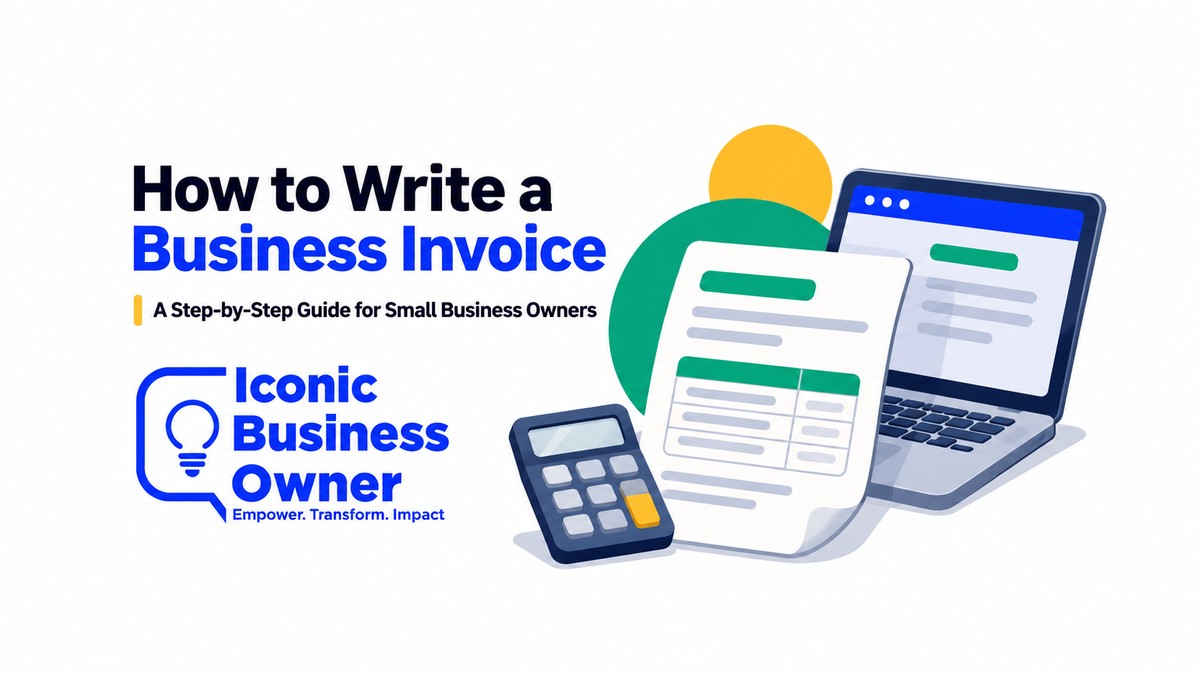
How to Write a Business Invoice: A Step-by-Step Guide for Small Business Owners
You’ve finished the work.
The customer is happy.
Now comes the part that actually turns your work into income: getting paid.
And that starts with a good invoice.
Learning how to write a business invoice might seem like a small administrative task, but your invoicing process can have a direct impact on your cash flow.
An unclear invoice can create questions, delays and unnecessary back-and-forth. A clear invoice tells your customer exactly what they are paying for, how much they owe, when payment is due and how to pay you.
If you’re starting a small business, freelancing, consulting or working as a sole trader, this guide will show you how to create a professional business invoice step by step.
I’ll also explain what Australian businesses should include on invoices, the difference between an invoice and a tax invoice, how to set payment terms and some common invoicing mistakes to avoid.
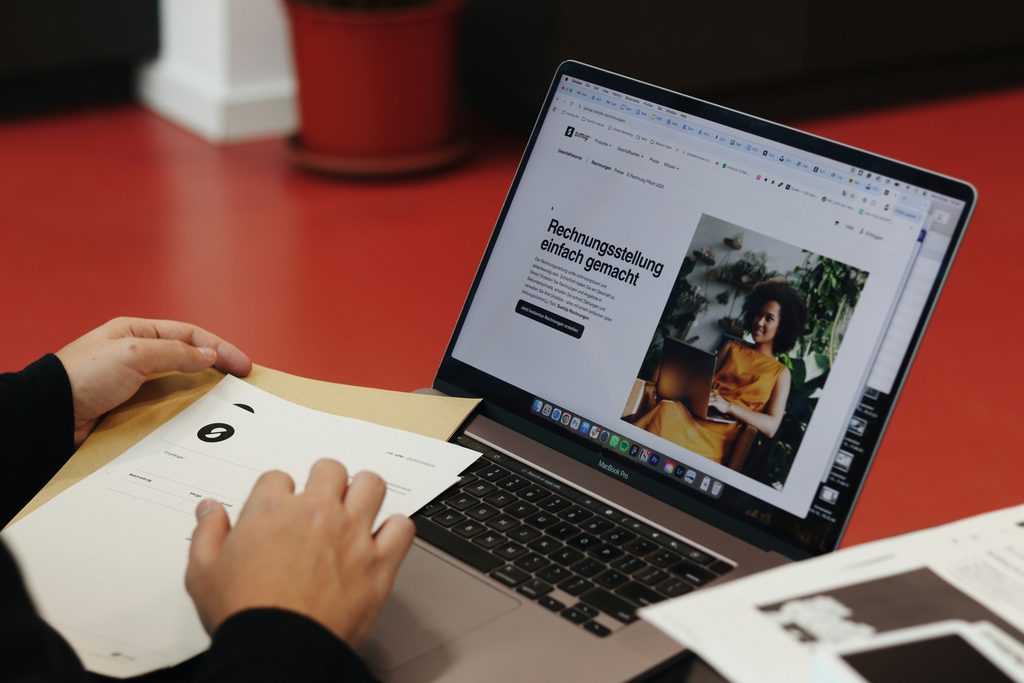
What Is a Business Invoice?
A business invoice is a document you send to a customer requesting payment for goods or services you have supplied.
At its simplest, an invoice tells the customer:
- What they purchased
- How much they owe
- When they need to pay
- How they can pay you
Invoices are also important business records.
They help you track sales, monitor outstanding payments, manage cash flow and maintain financial records.
The Australian Government notes that clear and correct invoices can help businesses track sales and payments, reduce payment delays and disputes, maintain records and meet tax obligations. (Business.gov.au)
What Should a Business Invoice Include?
A professional invoice should make it easy for your customer to answer five questions:
Who am I paying?
What am I paying for?
How much do I owe?
When is it due?
How do I pay?
For most small businesses, that means including:
- The word Invoice or Tax Invoice, as appropriate
- Your business name
- Your ABN
- Your contact details
- A unique invoice number
- The invoice date
- Your customer’s details
- A clear description of the goods or services
- Quantity or hours, where applicable
- Price
- GST, where applicable
- Total amount payable
- Payment due date
- Payment methods
- Payment terms
- A reference customers should use when paying
Let’s look at each one.
1. Clearly Label the Document
Your customer shouldn’t have to work out what document you’ve sent them.
Put INVOICE prominently near the top.
However, there’s an important distinction for Australian businesses.
If your business is registered for GST, invoices for taxable sales should be identified as Tax Invoice and contain the information required for a valid tax invoice.
If you’re not registered for GST, you should issue a standard invoice rather than calling it a tax invoice. (Australian Taxation Office)
This distinction matters.
Don’t add GST to your invoices simply because you have an ABN.
Having an ABN and being registered for GST are not the same thing.
2. Add Your Business Details
Your invoice should clearly identify your business.
Include:
Business name
ABN
Business address, if appropriate
Email address
Phone number
Website, if applicable
You can also include your logo and brand colours.
Branding isn’t essential for a valid invoice, but a clean, professional design can make your business look more established.
Keep it simple.
An invoice is primarily a financial document—not a marketing brochure.
3. Create a Unique Invoice Number
Every invoice should have its own unique number.
For example:
INV-001
INV-002
INV-003
Or you might use:
2027-001
2027-002
2027-003
You could even include a customer reference:
SMITH-001
Whatever system you choose, make it consistent.
Unique invoice numbers make it much easier to:
- Track invoices
- Match payments
- Follow up overdue accounts
- Answer customer questions
- Maintain accounting records
If a customer emails saying, “I have a question about invoice INV-024,” you immediately know which transaction they’re referring to.
4. Include the Invoice Date
Every invoice should show the date it was issued.
For example:
Invoice Date: 12 January 2027
This matters because your payment due date may be calculated from the invoice date.
If your terms are 14 days, for example, both you and the customer need to know when that 14-day period starts.
5. Include Your Customer’s Details
Next, identify who you’re invoicing.
Depending on the customer, include:
Customer name
Business name
Billing address
Email address
ABN, where required
If you’re invoicing a larger company, ask whether they require additional information such as:
- Purchase order number
- Department
- Project number
- Cost centre
- Contact person
Missing a purchase order number might seem minor, but in some organisations it can send your invoice straight into an approval delay.
Ask before sending the first invoice.
6. Describe Exactly What You’re Charging For
Avoid vague descriptions.
For example, instead of writing:
Consulting – $1,500
consider:
Business strategy consulting – 10 hours @ $150 per hour – $1,500
Instead of:
Website work – $800
you might write:
Website homepage design and development – $800
Clear descriptions help customers understand exactly what they’re paying for and can reduce disputes.
For each line item, consider showing:
| Description | Quantity | Unit Price | Amount |
| Business consulting | 5 hours | $120 | $600 |
| Financial report preparation | 1 | $350 | $350 |
The Australian Government recommends including a description of the goods or services supplied, including quantity and price. (Business.gov.au)
7. Show the Subtotal, GST and Total Clearly
Your customer shouldn’t need a calculator to work out how much they owe you.
For example:
Subtotal: $1,000.00
GST: $100.00
Total: $1,100.00
If GST doesn’t apply, don’t add it.
For businesses that aren’t registered for GST, the Australian Government advises that GST should not be included in prices or invoices. (Business.gov.au)
8. Include a Clear Payment Due Date
One of the simplest ways to make an invoice easier to understand is to state the actual due date.
Instead of relying only on:
Net 14
consider writing:
Payment terms: 14 days
Payment due: 26 January 2027
That removes ambiguity.
Common payment arrangements include:
- Payment upfront
- Payment on completion
- 7 days
- 14 days
- 30 days
- Deposits followed by a final payment
- Instalments
- Progress payments
The right terms depend on your business model, customers and cash-flow requirements.
Clear payment terms help customers understand when and how they’re expected to pay and can reduce payment disputes and late payments. (Business.gov.au)
9. Tell Customers How to Pay You
Don’t make customers search through old emails to work out how to pay.
Include your accepted payment methods directly on the invoice.
For example:
Bank transfer
Account Name: ABC Consulting
BSB: XXX-XXX
Account Number: XXXXXXXX
Reference: INV-024
You may also accept:
- Credit card
- Debit card
- Online payment gateway
- BPAY
- PayPal
- Other approved payment methods
The easier you make payment, the fewer unnecessary barriers stand between sending your invoice and receiving your money.
10. Include Your Payment Terms
Your invoice should make your expectations clear.
For example:
Payment is due within 14 days of the invoice date. Please use your invoice number as the payment reference.
Depending on your business and contracts, your terms may also address:
- Deposits
- Instalments
- Late payments
- Overdue accounts
- Refunds
- Payment processing fees
- Progress payments
However, payment terms shouldn’t first appear as a surprise on the final invoice.
Where appropriate, communicate important terms in your quote, proposal or contract before starting the work.
The Australian Government recommends including invoicing and payment instructions in contracts, including when payment is due and how the customer should pay. (Business.gov.au)

Photo by Jakub Żerdzicki on Unsplash
Business Invoice Example
Here’s what a simple invoice might look like.
TAX INVOICE
Bright Business Consulting
ABN: 12 345 678 901
Email: accounts@example.com
Phone: 03 XXXX XXXX
Invoice Number: INV-0024
Invoice Date: 12 January 2027
Payment Due: 26 January 2027
Bill To:
Smith & Co Pty Ltd
ABN: 98 765 432 109
| Description | Quantity | Rate | Amount |
| Business strategy consultation | 5 hours | $120.00 | $600.00 |
| Business planning report | 1 | $400.00 | $400.00 |
| Subtotal | $1,000.00 | ||
| GST | $100.00 | ||
| TOTAL DUE | $1,100.00 |
Payment Details
Account Name: Bright Business Consulting
BSB: XXX-XXX
Account Number: XXXXXXXX
Please use INV-0024 as your payment reference.
Payment terms: Payment is due within 14 days.
Thank you for your business.
Invoice vs Tax Invoice: What’s the Difference?
This is particularly important for Australian small business owners.
A standard invoice requests payment.
A tax invoice contains specific information required for GST purposes.
If you’re registered for GST, you generally need to issue tax invoices for taxable sales where required.
According to current Australian Government guidance, tax invoices must contain information including the seller’s identity, ABN, issue date, a description of what was supplied and relevant GST information. For sales of $1,000 or more including GST, the buyer’s identity or ABN must also be shown. (Business.gov.au)
If you’re not registered for GST, don’t label your invoice Tax Invoice. (Australian Taxation Office)
When Do You Need to Provide a Tax Invoice?
For Australian GST-registered businesses, a tax invoice is generally required for taxable sales above $82.50 including GST.
If a customer requests a tax invoice, businesses generally have 28 days to provide one. (Business.gov.au)
That doesn’t mean you should wait.
For most small businesses, I think the better habit is simple:
Finish the work. Send the invoice.
Don’t let completed work sit unbilled for days or weeks.
The Australian Government similarly recommends sending invoices promptly to encourage customers to pay on time. (Business.gov.au)
How to Write an Invoice If You’re a Sole Trader
If you’re operating as a sole trader, your invoice doesn’t need to look complicated.
Include your:
- Business or trading name
- ABN
- Contact information
- Invoice number
- Invoice date
- Customer details
- Description of goods or services
- Amount payable
- GST details where applicable
- Due date
- Payment instructions
If you’re not registered for GST, don’t charge GST or label the document Tax Invoice. (Business.gov.au)
The most important thing is that your invoice is accurate, professional and easy to understand.
How to Create an Invoice Step by Step
If you’re creating your first invoice, here’s the process I would follow:
Step 1: Add your business name and contact information.
Step 2: Add your ABN.
Step 3: Label the document Invoice or Tax Invoice, depending on your GST status.
Step 4: Assign a unique invoice number.
Step 5: Enter the invoice date.
Step 6: Add your customer’s information.
Step 7: Itemise the products or services supplied.
Step 8: Calculate the subtotal.
Step 9: Add GST where applicable.
Step 10: Show the total amount due prominently.
Step 11: Add the payment due date.
Step 12: Provide clear payment instructions.
Step 13: Check everything before sending it.
That last step matters.
Check the customer’s name, calculations, bank details and GST treatment before pressing send.
Common Invoicing Mistakes Small Business Owners Should Avoid
1. Waiting Too Long to Invoice
You completed the work on Monday.
Then Friday arrives.
Then another week.
And eventually you remember you still haven’t invoiced the customer.
That’s effectively giving your customer extra credit without intending to.
Create a routine for sending invoices promptly.
2. Using Vague Descriptions
“Services – $2,000” tells your customer very little.
Clearly explain what you’re charging for.
3. Forgetting the Due Date
Don’t assume your customer knows when you expect payment.
Tell them.
4. Incorrectly Charging GST
Having an ABN doesn’t automatically mean you should charge GST.
Your GST treatment depends on whether you’re registered and on the nature of the transaction.
5. Making Payment Difficult
If customers have to email you asking for your bank details, you’ve added an unnecessary step.
Make payment instructions obvious.
6. Not Following Up Overdue Invoices
Sending an invoice isn’t the end of your accounts receivable process.
Track whether it gets paid.
If it becomes overdue, follow up.
A simple professional reminder may be all that’s required.
7. Mixing Quotes and Invoices
A quote and an invoice serve different purposes.
A quote generally tells a prospective customer what you expect to charge before the work is completed.
An invoice requests payment for goods or services supplied.
Keeping the two processes clear helps reduce misunderstandings.
Photo by 2H Media on Unsplash.
Should You Use Word, Excel or Invoicing Software?
When you’re starting out, you might create invoices using:
- Microsoft Word
- Excel
- Google Docs
- Google Sheets
- An invoice template
- An online invoice generator
- Accounting software
There’s nothing wrong with starting simple.
However, as your invoice volume grows, manually creating and tracking invoices can become time-consuming.
Accounting or invoicing software can help automate:
- Invoice numbering
- Customer records
- Recurring invoices
- Payment reminders
- GST calculations
- Payment tracking
- Accounts receivable
- Financial reporting
You can also investigate eInvoicing. The Australian Government notes that businesses can use compatible accounting software or eInvoicing-enabled solutions to send invoices electronically through supported systems. (Business.gov.au)
Create Your Invoice With the Iconic Business Owner Free Invoice Generator
If you don’t want to build an invoice from scratch every time, you can use the Iconic Business Owner Free Invoice Generator.
It’s designed to make creating a professional small-business invoice simpler.
Enter your business details, customer information, products or services, prices and payment information, then generate your invoice.
[CREATE A FREE BUSINESS INVOICE ]
No complicated spreadsheet.
No spending 20 minutes adjusting table columns.
Just create your invoice and get back to running your business.
How to Get Your Invoices Paid Faster
Creating a professional invoice is only half the job.
You also need a good invoicing process.
Here are a few practices worth implementing:
- Discuss pricing before starting work.
- Agree on payment terms in advance.
- Collect the correct billing information before invoicing.
- Invoice promptly.
- Include an actual due date.
- Make payment instructions clear.
- Offer convenient payment options where appropriate.
- Track outstanding invoices.
- Send reminders promptly.
- Keep communication professional.
Clear invoices support healthier cash flow. The Australian Government specifically recommends sending correct invoices promptly, keeping copies and following up quickly on unpaid invoices. (Business.gov.au)
How Long Should You Keep Business Invoices?
Invoices form part of your business records.
Australian Government guidance states that businesses generally need to keep most business records for at least five years, although the applicable retention period can depend on the type of record and your circumstances. (Business.gov.au)
Whether you use paper or digital records, establish a system that allows you to retrieve invoices when needed.
Don’t rely on searching through thousands of old emails.
Frequently Asked Questions About Business Invoices
What information needs to be on an invoice in Australia?
A typical invoice should identify the seller and customer, include an invoice number and date, describe the goods or services supplied, show the amount payable and explain when and how payment should be made. Additional requirements apply to tax invoices issued by GST-registered businesses. (Business.gov.au)
Do I need an ABN on my invoice?
For an Australian tax invoice, the supplier’s ABN is one of the required pieces of information. (Australian Taxation Office)
Do I put GST on an invoice if I’m not GST registered?
No. If you aren’t registered for GST, you don’t add GST to your prices and should not issue an invoice labelled Tax Invoice. (Business.gov.au)
What is an invoice number?
An invoice number is a unique reference used to identify an invoice. For example, INV-001, INV-002 and INV-003. A consistent numbering system makes invoices easier to track and reconcile.
What payment terms should I put on an invoice?
Your terms depend on your business. Examples include payment upfront, payment on delivery, seven days, 14 days or 30 days. Whatever you choose, make the due date and accepted payment methods clear. (Business.gov.au)
What’s the difference between an invoice and a receipt?
An invoice generally tells the customer what they owe before payment, while a receipt confirms what they have paid. In some retail and online transactions, a single document can serve both purposes because payment occurs at the time of sale. (Business.gov.au)
Can I make my own invoice?
Yes. You can create invoices manually using Word or Excel, use a template, use an online invoice generator or create them through accounting software. Whatever method you choose, ensure your invoices contain the information required for your circumstances.
Final Thoughts
A professional invoice doesn’t need to be complicated.
It needs to be clear, accurate and easy to pay.
Make sure your customer can immediately see:
Who they’re paying.
What they’re paying for.
How much they owe.
When payment is due.
How to pay you.
Then build a simple process around it.
Invoice promptly.
Track what you’re owed.
Follow up when payments become overdue.
Keep your records organised.
Because invoicing isn’t just administration.
It’s part of managing your cash flow.
And a business that consistently does the work but doesn’t consistently collect the money it has earned will eventually have a much bigger problem than an overdue invoice.
Ready to Create Your Invoice?
Use the Iconic Business Owner Free Invoice Generator to create a clear, professional invoice for your business.
Keep working on your finances
Visit Finance for Small Business for cash-flow resources, or use the free invoice generator to put this guide into practice.