How AI Automation Can Streamline Your Daily Business Operations
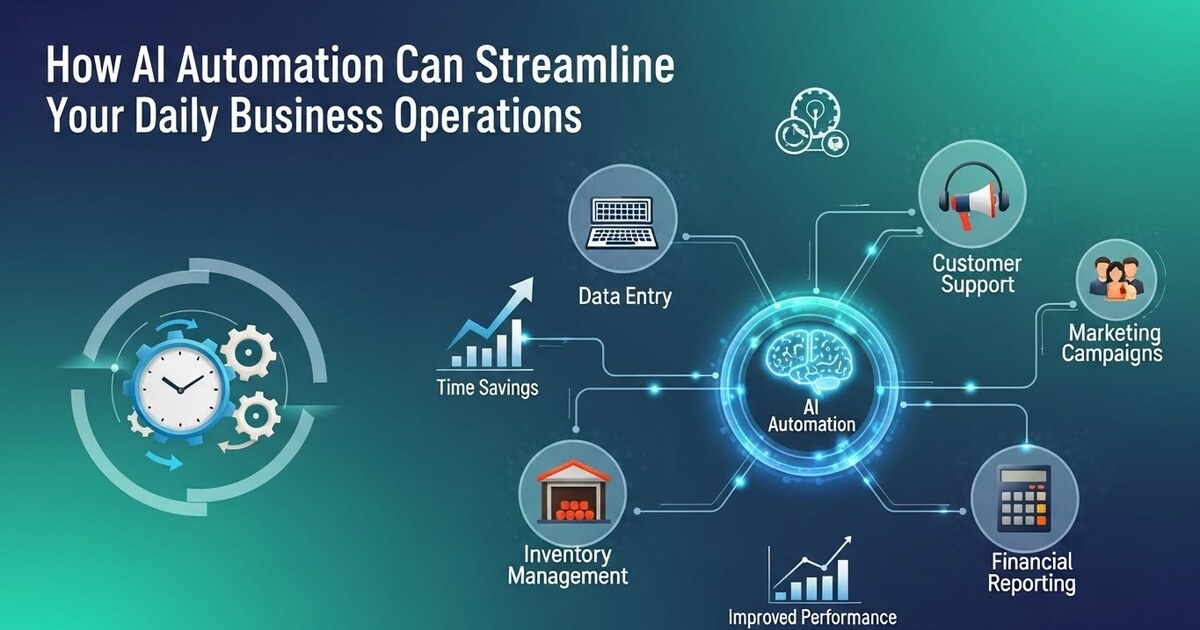
Imagine a business day not defined by the urgent ping of notifications, the scramble to meet a content deadline, or the tedious grind of data entry, but by focused blocks of strategic thinking, creative problem solving, and meaningful client connection. This is not a fantasy of reduced workload, but the practical reality made possible by artificial intelligence automation. AI automation is not a single tool; it is a transformative approach. It functions as the silent conductor of your daily operations, orchestrating the repetitive, data heavy, and time consuming tasks that comprise the background noise of business, allowing the human symphony of insight and innovation to play at its full potential. For the small business owner, this is the ultimate form of leverage: deploying digital intelligence to handle the predictable so you can master the exceptional.
The Core Principle: From Manual Execution to Intelligent Orchestration
The leap from traditional automation to AI powered automation is significant. Traditional automation follows strict “if this, then that” rules: if a form is submitted, then send a thank you email. AI automation introduces cognition and adaptation into the loop. It can analyze content, make contextual decisions, generate original material, and learn from patterns. It moves from being a simple robot following a script to being an intelligent assistant that manages processes.
This shift transforms your role. You are no longer the primary doer of repetitive tasks. You become the architect and overseer of intelligent systems. Your daily work changes from executing transactions to designing the rules of engagement, reviewing intelligent outputs, and intervening only where nuanced judgment is required. This is how you scale your presence and impact without linearly scaling your hours or headcount.
The Communication Hub: Automating Outreach and Engagement
Daily communication is a vortex of time. AI automation now manages this flow with startling sophistication, ensuring consistency and timeliness while preserving a human touch.
Intelligent Email Management: Tools like Superhuman and Spark Mail use AI to triage your inbox, prioritizing messages from key clients or highlighting emails that require urgent action based on content and past behavior. They can draft contextual, polite replies to common inquiries with a single click, learning your tone and style over time. This reduces email processing from a multi hour daily chore to a focused 20 minute review session.
Proactive Customer Nurturing: Platforms like HubSpot or Intercom employ AI to automate personalized customer journeys. Beyond sending a simple welcome email, these systems can analyze a user’s behavior on your website. If a visitor repeatedly views a pricing page, the AI can automatically trigger a tailored email sequence addressing common buying objections or offer a demo. If a customer hasn’t logged into your software for 30 days, an automated, personalized check in email can be sent to re engage them. This proactive, intelligent communication happens 24/7, turning your marketing and support into a always on, responsive system.
The Content Engine: Automating Creation and Curation
Producing a steady stream of marketing content, social media posts, and internal documentation is a relentless demand. AI automation acts as your always available content co pilot.
Dynamic Content Generation: Using a tool like Jasper or Copy.ai, you can automate the first draft of entire content workflows. Provide a brief for a blog post, and the AI can generate an outline, expand it into sections, and even suggest SEO optimized headlines. It can repurpose a single webinar transcript into a newsletter summary, five social media posts, and a series of quote graphics. This doesn’t replace human editing and brand voice, but it eliminates the paralyzing blank page and accelerates production from days to hours.
Intelligent Social Media Management: Platforms like Buffer and Hootsuite are integrating AI to analyze your past performance and suggest optimal posting times, predict content performance, and even generate post captions based on a link you provide. This automates not just the scheduling, but the strategic thinking behind your social calendar.
The Operational Backbone: Automating Data and Administration
The administrative spine of your business—scheduling, data entry, meeting management—is ripe for intelligent automation. These are tasks that require minimal creativity but maximum accuracy and consistency.
Cognitive Scheduling: While tools like Calendly have automated meeting booking, next generation AI like Clockwise or Motion goes further. They analyze your calendar patterns, identify your “focus time” for deep work, and automatically reschedule lower priority meetings to protect it. They can find the optimal time for a team meeting by understanding not just availability, but also time zone preferences and historical meeting energy levels, acting as a true strategic assistant for your time.
Meeting Intelligence and Synthesis: AI tools like Otter.ai, Fireflies.ai, and Grain attend every meeting for you. They transcribe conversations in real time, distinguish between speakers, summarize key decisions, and extract specific action items, assigning them to individuals based on the discussion. At the end of a one hour strategy call, you receive a formatted summary and a list of next steps in your project management tool, without you or an assistant taking a single note. This automation ensures nothing is lost and accountability is clear.
Intelligent Data Processing: AI can now be your data clerk. Using Zapier’s AI features or Make’s AI modules, you can create automations that do more than move data; they understand it. For example, an AI automation can read incoming customer feedback emails, analyze the sentiment (positive, negative, frustrated), categorize the topic, and then route the email to the appropriate team or response queue. It can extract key details from a scanned invoice or receipt and populate your accounting software, learning to recognize vendors and categories over time.
The Strategic Insight Engine: Automating Analysis and Forecasting
Perhaps the most powerful application is using AI to automate the analysis of your business performance, turning raw data into prescriptive insight.
Automated Business Intelligence: Tools like Polymer or the AI in Microsoft Power BI allow you to connect your data sources (sales, web traffic, CRM) and then simply ask questions in plain language: “Why did sales dip in the Central region last Tuesday?” or “Forecast next quarter’s revenue based on current pipeline and seasonal trends.” The AI analyzes the datasets, identifies correlations, creates visualizations, and provides a written narrative of its findings. This gives you the analytical power of a dedicated data analyst on demand, transforming weekly report compilation into instantaneous insight generation.
Implementing Your Intelligent Operations: A Practical Blueprint
Adopting AI automation is a cultural and operational shift. Implement it gradually to build comfort and demonstrate value.
Phase 1: The Low Hanging Fruit (Week 1-2)
- Automate one administrative task: Implement a meeting transcription tool for all your calls.
- Set up one intelligent communication: Create an AI driven welcome sequence for new email subscribers.
Phase 2: System Integration (Month 1)
- Connect two systems with cognitive AI: Use Zapier to create a workflow where customer support tickets are analyzed by AI and tagged by urgency and topic before reaching your team.
- Automate a content process: Use an AI writer to generate first drafts of your next three blog posts.
Phase 3: Strategic Delegation (Month 2 & Beyond)
- Delegate analysis: Use an AI business intelligence tool to generate your weekly sales and marketing report.
- Implement predictive systems: Use AI in your CRM to score leads automatically based on website interaction and email engagement.
The ultimate measure of success is the quieting of the operational noise. You will know AI automation is working when your day is no longer fractured by constant context switching, when reports generate themselves, when customer inquiries are triaged before they reach you, and when you consistently start your day with a clear agenda of high value work instead of a reactive scramble.
This is the promise of AI automation: it does not just make you faster at the old way of working. It enables a fundamentally new way of working. It streamlines daily operations not by making you a more efficient task rabbit, but by making you a more effective conductor. Your business becomes a smarter, more responsive, and more resilient organism. The silent conductor works in the background, ensuring every section of your business plays in harmony, so you can focus on composing the future of your enterprise.