Best AI Tools for Small Businesses to Save Time and Money
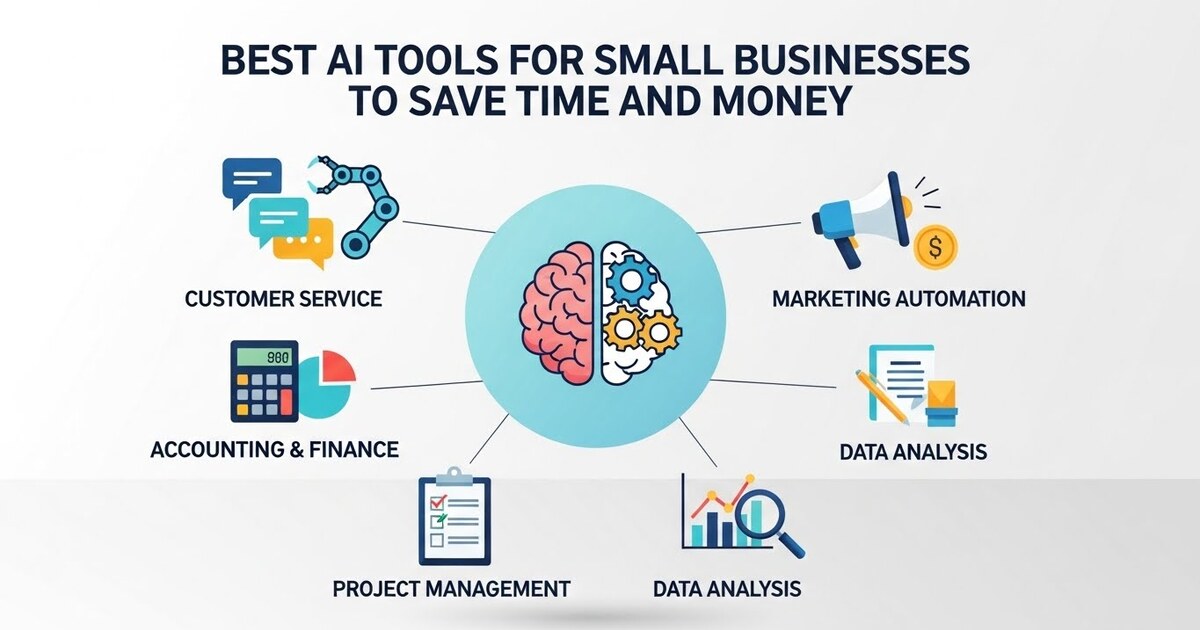
For the small business owner, time and money are the twin currencies of survival and growth. Every hour spent on administrative tasks is an hour not spent on strategy or service. Every dollar spent on inefficient processes is a dollar not invested in innovation. For years, advanced technology that could address these constraints seemed the exclusive domain of large corporations with vast budgets. This era has decisively ended. A new generation of artificial intelligence tools, built with remarkable specificity and accessibility, is now a practical reality for the leanest of operations. These are not science fiction fantasies, but tangible software partners that can listen, write, analyze, create, and automate. They act as a force multiplier for a small team, allowing you to compete not with brute manpower, but with intelligent leverage. This guide explores the essential categories of AI tools that deliver immediate, measurable returns on investment by saving you the most precious resources you have: your time and your capital.
The Foundational Shift: AI as a Co-Pilot, Not a Replacement
The most important mindset shift is to view AI not as a mysterious, all-knowing oracle, but as a highly skilled, instantaneous co-pilot. Its strength lies in augmentation—handling the repetitive, the time-consuming, and the data-heavy aspects of your work, freeing you to apply human judgment, creativity, and relationship-building where they matter most. These tools excel at drafting, summarizing, organizing, and generating first passes, which you then refine and finalize. The goal is not to remove the human from the loop, but to elevate the human to more meaningful work.
Category 1: The Writing and Communication Engine
One of the most profound time sinks in business is creating clear, effective written content. From marketing emails and website copy to client proposals and social media posts, writing is omnipresent. AI writing assistants have evolved from clunky grammar checkers into sophisticated collaborators.
ChatGPT (by OpenAI) and its counterparts like Claude (Anthropic) are the versatile foundations. Think of them as on-demand writing partners. You can provide a simple prompt like, “Write a friendly yet professional follow-up email to a client who hasn’t responded to our proposal after one week,” and receive a complete, polished draft in seconds. Their true power for business lies in consistency and volume. You can use them to:
- Generate multiple versions of ad copy for A/B testing.
- Draft detailed product descriptions for an e-commerce site.
- Summarize long meeting notes into actionable bullet points.
- Brainstorm ideas for blog posts or marketing campaigns.
The key is in the prompt: the more specific and contextual your instruction, the more valuable the output. A tool like Jasper builds on this foundation, offering templates and workflows specifically tuned for marketing teams, ensuring brand voice consistency across campaigns.
Category 2: The Visual and Design Creator
Professional visual content is no longer a “nice to have.” It is essential for marketing, social media, and branding. AI image generation and design tools democratize this capability, allowing you to produce high-quality visuals without a graphic designer on staff.
Canva’s Magic Studio suite is arguably the most accessible and powerful for small business. Its AI tools, integrated directly into the familiar Canva interface, allow you to:
- Magic Design: Upload a photo and instantly generate a complete, professionally laid out social media post, presentation, or flyer.
- Magic Write: Generate text for your designs, from headlines to body copy.
- AI Image Generation (Magic Media): Create custom images and graphics from a text description (e.g., “a modern logo for a sustainable coffee shop named ‘Bean There’ with a leaf icon”).
- Magic Edit & Eraser: Professionally edit photos by replacing elements or removing backgrounds with a brush stroke.
For more advanced, standalone image generation, DALL-E 3 (integrated into ChatGPT) or Midjourney produce stunning, photorealistic or artistic images from detailed prompts, ideal for unique blog graphics or ad imagery.
Category 3: The Customer Interaction and Support Automator
Customer inquiries are constant, and answering the same questions repeatedly is a poor use of skilled human time. AI can handle the first line of engagement, providing instant, 24/7 support and qualifying leads.
AI-Powered Chatbots like those from Intercom or Drift can be trained on your website content, FAQs, and knowledge base. They engage visitors in natural conversation, answer common questions, book meetings, and collect contact information. This ensures no lead is missed after hours and that your team only spends time on conversations that require deep human expertise.
Email Triage and Response Tools like Superhuman (with AI features) or Spark Mail use AI to prioritize your inbox, summarize long threads, and even suggest short, contextual replies. This can cut email management time in half, ensuring you respond to what matters most, faster.
Category 4: The Data Analyst and Insight Generator
Small businesses are often data-rich but insight-poor. You have sales figures, website traffic, and customer information, but finding the time to analyze it for actionable trends is a challenge. AI analytics tools act as your personal data scientist.
Microsoft Copilot for Microsoft 365 and Google’s Duet AI for Workspace are deeply integrated into the productivity suites you may already use. In Excel or Google Sheets, you can ask, in plain English, “What were our top-selling products last quarter, and why?” The AI will analyze the data, create a chart, and provide written insights. In Google Slides or PowerPoint, you can ask it to create a presentation based on a document.
Specialized AI for Business Intelligence tools like Polymer or Akkio allow you to upload spreadsheets or connect to databases and then simply ask questions about your data to uncover hidden patterns, forecast trends, and generate reports automatically. This turns complex data analysis from a weekly chore into a five minute conversation.
Category 5: The Operational and Administrative Automator
The backbone of business is filled with repetitive, rule-based tasks: scheduling, data entry, note-taking, and follow-ups. AI can systematize these processes with remarkable reliability.
Scheduling Assistants like Calendly or Clockwise use AI to find optimal meeting times across multiple calendars, respecting focus time and preferences. They eliminate the endless back-and-forth of “When are you free?”
Meeting Intelligence Tools like Otter.ai, Fireflies.ai, or Grain join your video calls, transcribe conversations in real time, identify different speakers, summarize key points, and extract action items. This liberates you from frantic note-taking and creates a searchable archive of every discussion and decision.
Process Automation Platforms like Zapier or Make now incorporate AI into their workflows. You can create “Zaps” that, for example, use AI to analyze the sentiment of a customer support ticket and automatically route angry customers to a senior team member, or to draft a personalized follow-up email based on data from a CRM form submission.
Building Your AI Tool Stack: A Principled Approach
Adopting AI should be strategic, not scattered. Follow this framework to integrate intelligence without chaos.
- Identify the Highest Friction Point: Start with your biggest time drain. Is it creating content? Managing customer inquiries? Analyzing sales data? Choose one category from above to address first.
- Start with a Familiar Foundation: If you already use Canva for design, explore its AI features first. If you live in Google Workspace, test Duet AI. Integration reduces learning curves.
- Adopt the “First Draft” Mindset: Never outsource final judgment. Use AI output as a superior starting point—a draft email, a design concept, a data summary—that you then refine and finalize with your expertise.
- Prioritize Tools with Clear ROI: Many tools offer free tiers or low-cost trials. Measure their value. Did the writing assistant save you 5 hours of work this month? Did the chatbot generate 10 qualified leads? Focus on tools that demonstrate tangible savings.
- Maintain the Human in the Loop: Especially for customer-facing communication, ensure there is always a human review step. AI excels at scale and speed, but you excel at empathy, nuance, and brand judgment.
The integration of these AI tools represents the next leap in small business productivity. They are not about replacing your team’s unique value, but about removing the friction that prevents them from delivering it. By strategically deploying these intelligent assistants, you are not just saving minutes and dollars. You are investing in a more capable, more focused, and more innovative business. You are building an operation where technology handles the predictable, so your human talent can focus on the exceptional. In the competitive landscape of small business, this intelligent leverage is no longer a futuristic advantage; it is the new operational baseline for those who intend to lead.