Accounting Software vs Manual Accounting: What’s Better?
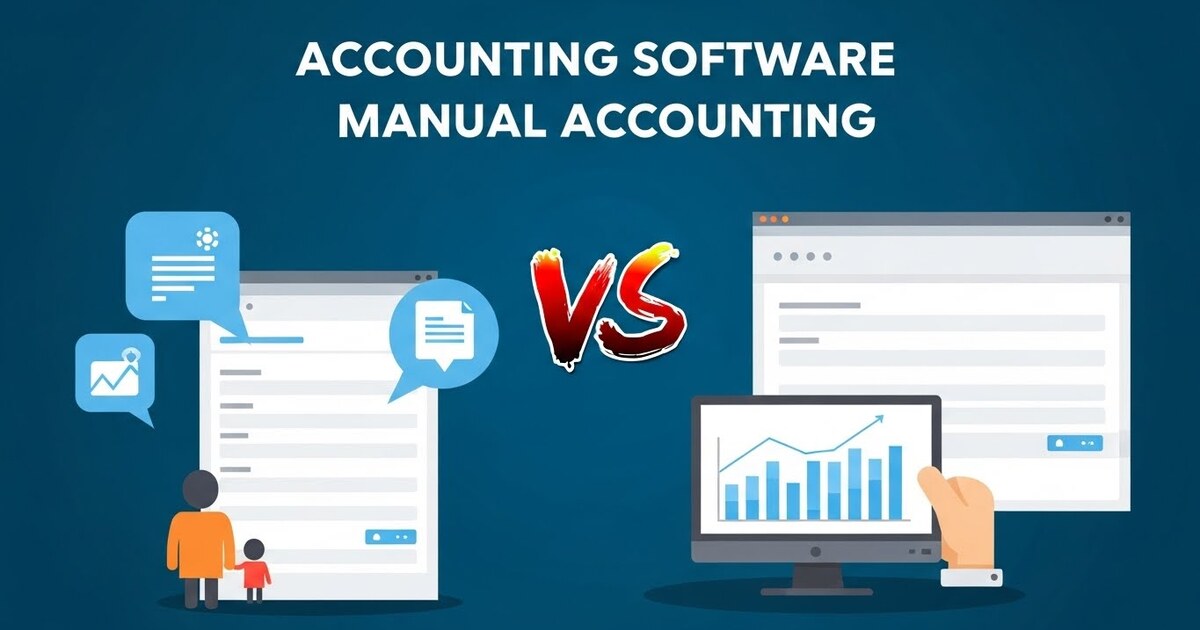
The image of the small business bookkeeper, hunched over a green ledger under a pool of lamplight, meticulously penning entries in perfect rows, is a powerful one. It evokes diligence, control, and a tangible connection to the numbers. For decades, this manual accounting was the only way. Today, that solitary ledger faces a formidable counterpart: the dynamic, interconnected dashboard of accounting software. The question for a modern business owner is not merely about cost or convenience, but about the fundamental architecture of their financial intelligence. Is the deliberate, hands-on control of manual accounting superior, or does the automated, intelligent power of software represent an essential evolution? This is not a simple preference; it is a strategic decision with profound implications for accuracy, insight, and growth.
The Case for Manual Accounting: The Illusion of Control
The arguments for a manual system, typically maintained in physical books or static spreadsheets like Microsoft Excel, are rooted in perceived virtues that often mask significant liabilities.
Perceived Direct Control and Intimate Knowledge
Proponents argue that writing each transaction forces a deeper understanding of the financial story. The physical act of posting to a journal and then a ledger creates a ritualistic familiarity. There is a sense of absolute ownership—the books are literally in your hands, with no intermediary software or subscription. For a very simple, cash based hobby business with a handful of monthly transactions, this can feel sufficient. The startup cost is ostensibly just the price of a ledger book or a spreadsheet template.
The Hidden and Profound Costs of “Free”
However, this perception of low cost and high control is a dangerous illusion. The true cost of manual accounting is measured not in dollars for paper, but in the catastrophic currency of time, error, and blindness.
- The Tax of Time: Every minute spent manually copying data from a receipt to a spreadsheet is a minute not spent on sales, product development, or customer service. This time cost scales exponentially with business growth. A task that takes 5 minutes for 10 transactions becomes a 10-hour monthly nightmare for 1,000.
- The Inevitability of Human Error: A single transposed number, a forgotten decimal, or a missed entry can cascade through an entire set of books. Finding these errors is a forensic exercise, often requiring a complete re-audit of the period. In a software system, bank feeds eliminate entry errors, and reconciliation tools highlight discrepancies instantly.
- The Paralysis of Real Time Insight: Manual systems are, by definition, historical. They tell you what happened last week or last month. They cannot provide a real time view of your cash balance, your outstanding invoices, or your up to the minute profit margin. Decision making becomes guesswork, not strategy. You are steering your business by looking at a map of where you’ve been, not a GPS of where you are.
The Software Imperative: Building a Living Financial System
Modern cloud based accounting software (like QuickBooks Online, Xero, or FreshBooks) is not merely a digital version of a paper ledger. It is a fundamentally different entity: an active, intelligent system that automates the past to illuminate the present and forecast the future.
Automation as Liberation
The core advantage is the elimination of repetitive, low value tasks.
- Direct Bank Feeds: Transactions flow automatically from your bank and credit cards into the software daily. No manual entry.
- Rule Based Categorization: The software learns that charges from “AWS” are “Software Expenses” and categorizes them automatically.
- Automated Invoicing & Payments: Recurring invoices are sent, online payments are captured, and reminders for overdue accounts are handled without your intervention.
- Digital Receipt Capture: Tools like Dext allow you to snap a photo of a receipt; optical character recognition extracts the data and pushes it directly into your ledger.
This liberation of time is the most immediate and tangible return on investment. The owner is freed from the role of data clerk and elevated to the role of financial analyst.
Accuracy, Compliance, and the Audit Trail
Software enforces accounting principles and creates an immutable, digital paper trail. It prevents you from making an unbalanced journal entry. Every transaction is time stamped and linked to a digital copy of its source document (the receipt, the invoice). In the event of a tax inquiry or audit, you can produce perfect records in seconds, not days of frantic searching through file cabinets.
Real Time Intelligence and Strategic Foresight
This is where software transforms from a record keeping tool into a strategic asset. A live dashboard shows your key metrics the moment you log in: bank balances, profit and loss trends, accounts receivable aging, and cash flow projections. You can run “what if” scenarios: What if I hire an employee? What if a major client pays late? This predictive capability, often integrated with dedicated forecasting tools, allows for proactive management, not reactive panic. You gain insight, not just data.
The Critical Comparison: A Side-by-Side Verdict
| Consideration | Manual Accounting (Spreadsheets/Ledgers) | Modern Accounting Software |
|---|---|---|
| Core Function | Historical recording of transactions. | Active management & automation of financial operations. |
| Time Commitment | Extremely high & scales linearly with transactions. | Very low after setup; time is spent on review, not entry. |
| Accuracy & Error Risk | Very high risk of human entry & calculation errors. | Very low; automated feeds & built-in controls prevent imbalances. |
| Real-Time Insight | None. Reports require manual compilation, are always outdated. | Immediate. Dashboards & reports reflect live data. |
| Cash Flow Management | Reactive guesswork based on old data. | Proactive forecasting & scenario modeling. |
| Scalability | Poor. Becomes unmanageable beyond a minimal transaction volume. | Excellent. Designed to scale with business complexity. |
| Compliance & Audit | Difficult, messy, paper-based. High stress during reviews. | Simple, digital, searchable. Creates a clear audit trail. |
| Cost | Low direct cost (paper, spreadsheet license). Extremely high hidden cost (owner/employee time, error correction). | Clear monthly subscription fee. High ROI due to massive time savings & improved decision-making. |
| Collaboration | Difficult. Files are singular; sharing risks version chaos. | Easy. Secure, role-based access for owners, bookkeepers, & accountants. |
The Verdict: Software is Not an Alternative; It is a Necessity
For any business that is more than a simple hobby, the question is not which is better, but when to adopt software. The breakeven point comes astonishingly early.
The argument for manual accounting is, in the end, a sentimental one. It clings to an outdated model of control that is, in reality, a form of self imposed limitation. It confuses busyness with diligence. In today’s fast paced environment, the risks of manual accounting—the wasted time, the likely errors, the strategic blindness—are not just inefficiencies; they are existential threats to competitiveness and growth.
Accounting software represents the necessary evolution of business management. It is the tool that allows a small business to operate with the financial intelligence and operational efficiency that was once reserved for large corporations. It turns accounting from a burdensome, backward looking chore into a strategic, forward looking advantage.
The transition is not a loss of control, but a transfer of responsibility. You are not handing your finances to a black box; you are deploying a sophisticated system to handle the predictable tasks of recording and organizing, so you can claim true control over the strategic tasks of analysis, planning, and growth. The quill and ledger had their era. For the modern business, building on that foundation is not an option; it is an imperative for survival and success. The choice is between managing your finances in the dark ages, or illuminating them with the tools of today.