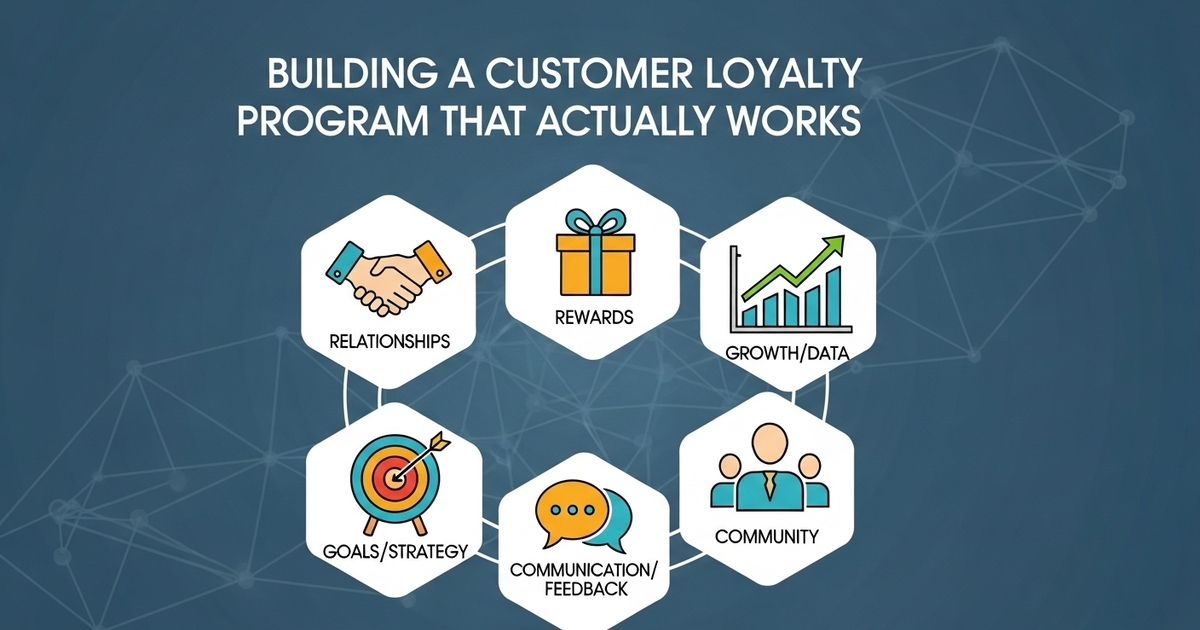
Building a Customer Loyalty Program That Actually Works
You have worked hard to get your customers. You paid for the ads, you built the website, you delivered the product.
But the moment they walk out the door (or close the browser tab), the clock starts ticking. Will they come back? Or will they get distracted by a competitor’s shiny new offer?
Most small businesses try to solve this with a “Customer Loyalty Program.”
Usually, this looks like a crumpled paper punch card that gets lost in a wallet, or a generic “earn points” app that nobody understands.
Here is the hard truth: Points are boring.
Nobody wakes up excited to earn 10 points for a $5 coffee. People don’t want points. They want to feel special. They want to feel like an insider. They want to feel smart for choosing you.
If your loyalty program feels like a transaction (“Buy 10, Get 1 Free”), you are training your customers to look for discounts. If you want true loyalty—the kind where they drive past your competitor to get to you—you need to build an Experience.
Let’s talk about how to build a customer loyalty program that actually changes behavior and turns casual buyers into raving fans.
The “Transactional vs. Emotional” Gap
There are two types of loyalty.
- Transactional Loyalty: “I buy from you because you are the cheapest or you gave me a coupon.” This is weak. As soon as someone else is cheaper, they are gone.
- Emotional Loyalty: “I buy from you because I love your brand, I trust you, and you treat me well.” This is ironclad.
Most punch cards build transactional loyalty. We want to build emotional loyalty.
Think about Starbucks. Sure, the free drinks are nice. But the real hook is the app experience—ordering ahead, skipping the line, getting a free treat on your birthday. It makes your life better, not just cheaper.
Deep Dive: The 3 Pillars of a Modern Customer Loyalty Program
Forget the punch card. A modern customer loyalty program needs three layers.
1. The “Earn” Mechanism (Keep it Simple)
Don’t make me do calculus to figure out my reward.
- Bad: “Earn 3.5 points for every dollar, and redeem 500 points for a $2 discount.” (What?)
- Good: “Spend $100, get $10 off.” Or “Refer a friend, get a free month.”
The Golden Rule: The customer should be able to explain your loyalty program to a friend in one sentence.
2. The “Burn” Mechanism (Make it Desirable)
What do they get? Discounts are okay, but experiences are better.
- Exclusive Access: Early access to a sale. A “Members Only” shopping hour.
- Status: A special “Gold Member” card or digital badge.
- Free Product: A free item is often perceived as more valuable than a 10% discount, even if it costs you less.
3. The “Surprise and Delight” Factor
This is the secret sauce. Don’t just give rewards when they hit a milestone. Give them something random.
- “Hey Sarah, we noticed you have been a customer for a year. Coffee is on us today.” That unexpected gesture creates a story Sarah will tell five friends.
How to Build Your Program (Step-by-Step)
You don’t need expensive software to start. You need a strategy.
Step 1: Define the Goal
What behavior do you want to drive?
- Do you want them to visit more often? (Frequency)
- Do you want them to spend more per visit? (Average Order Value)
- Do you want them to refer friends? (Advocacy) Pick ONE primary goal. Your program should be designed to reward that specific behavior.
Step 2: Choose Your Currency
- Points: Good for high-frequency, low-value purchases (coffee, makeup).
- Tiers: Good for high-value, status-driven brands (airlines, luxury fashion). “Spend $500 to reach VIP status.”
- Paid Membership: (The Amazon Prime model). Customers pay a fee upfront for perks (free shipping, discounts). This is powerful because once they pay, they only shop with you to get their money’s worth.
Step 3: Select the Tech
- Low Tech: A simple email list. “Reply to this email for your birthday gift.”
- Mid Tech: Digital punch card apps like Loopy Loyalty or Stamp Me.
- High Tech: Integrated POS systems (Square, Toast, Shopify Apps like Smile.io or Yotpo). These are best because they track data automatically without the customer doing anything.
Step 4: The Launch
Don’t just turn it on quietly. Make it an event. “Join our VIP Club this week and get 500 bonus points instantly.” Train your staff. If your employees don’t understand it or sound excited about it, your customers won’t sign up.
Actionable Tips for Retention
1. Name Your Currency Don’t call them “Points.” Call them “Stars,” “Beans,” “Miles,” or “Karma.” Give it personality that fits your brand.
2. Give a “Head Start” This is a classic psychological hack. If you need 10 stamps to get a free reward, give them a card with 2 stamps already on it. People are far more likely to finish a goal if they feel like they have already started.
3. Use Text Messaging (SMS) Email open rates are 20%. SMS open rates are 98%. Use a tool to send loyalty updates via text. “Hey Mike, you are only $10 away from a free burger!”
4. Measure the “Breakage” “Breakage” is the percentage of points that are never redeemed. High breakage is bad—it means your rewards aren’t motivating enough. You want people to redeem points. A redeeming customer is a retaining customer.
The FAQ Section
Q: Do customer loyalty programs cost too much money? A:
If designed right, they make money. It costs 5x more to acquire a new customer than to keep an existing one. Giving away a $2 coffee to keep a customer who spends $500 a year is the best investment you will ever make.
Q: What if people just abuse the system?
A: A tiny percentage might. Don’t design your program for the 1% of cheaters. Design it for the 99% of honest fans.
Q: How do I know if it is working?
A: Track your Customer Lifetime Value (LTV). If the LTV of a loyalty member is higher than a non-member (it should be), the program is a winner.
The Bottom Line
A customer loyalty program isn’t about bribery. It is about recognition.
It is a way of saying, “I see you. I value you. You aren’t just a credit card number to me.”
In a world of faceless transactions, making your customer feel like a “Regular” is the ultimate competitive advantage.
So, ditch the paper cards. Build something that makes them smile. And watch your retention rates climb.
Ready to boost your retention? Customer Loyalty programs are just one piece of the puzzle. Check out our guide on strategies to double customer lifetime value for more ways to keep your customers coming back.