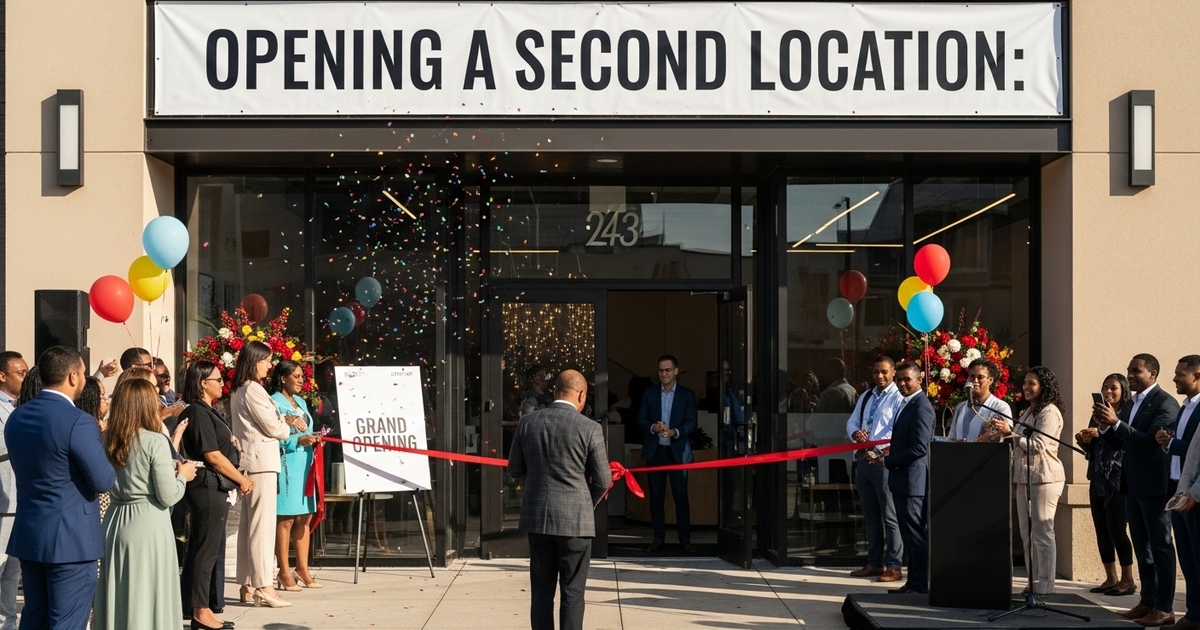
Opening a Second Location: Complete Checklist and Timeline
You did it. You built a business that works.
Your current location is buzzing. The team is solid. Customers are happy. And every time you look at the monthly P&L, you think, “If one location is doing this well, imagine what two could do.”
It’s the classic entrepreneur’s dream. Expansion feels like the natural next step. It’s validation that you built something real.
But here is the hard truth that nobody tells you: Opening a second location isn’t just adding more; it’s multiplying complexity.
Going from one store to two is the hardest leap in business. When you have one location, you are the system. You are there to fix problems, train staff, and charm customers. When you open a second location, you physically cannot be in two places at once. The “You” system breaks.
Suddenly, you need documented processes, a stronger management team, and cash reserves you never thought about before.
If you rush this, you risk not only the new location failing but dragging your original, profitable location down with it. I have seen it happen too many times.
So, let’s slow down. Let’s look at exactly what it takes to expand successfully. This isn’t just a checklist; it’s a survival guide for your sanity and your bank account.
The “Cannibalization” Fear
Before we even look at a map, we need to talk about cannibalization.
Many owners open a second location too close to the first one because they want to make logistics easy. “I can just drive between them in 10 minutes!”
But if 30% of your new location’s sales come from customers who used to go to your first location, you haven’t grown. You’ve just increased your overhead.
You need to understand your customer’s “drive time tolerance.” If you own a coffee shop, people won’t drive more than 5-7 minutes. You can open another one 15 minutes away safely. If you are a destination furniture store, people might drive an hour. Opening another one 20 minutes away is suicide.
Doing proper market research before expansion is non-negotiable here. Don’t guess. Know.
Deep Dive: The “Am I Ready?” Audit
Don’t sign a lease until you can answer “Yes” to these three questions.
1. Is Location #1 running without you? If you have to be there to open the doors or handle a refund, you aren’t ready. You need a manager at Location #1 who treats the business like they own it.
2. Do you have the cash? New locations rarely make money in the first 6 months. Do you have enough cash reserves to cover the build-out, the inventory, AND the operating losses for half a year?
3. Is your culture portable? Your culture right now is probably “watching you work.” That doesn’t scale. Do you have written core values? Training manuals? Standard Operating Procedures (SOPs)? If it’s not written down, it doesn’t exist.
The 6-Month Timeline to Launch
Opening a new spot takes longer than you think. Here is a realistic timeline to keep you on track.
Months 1-2: Strategy & Finance
- Secure Funding: Whether it’s an SBA loan or reinvested profits, get the capital secured now.
- Site Selection: Work with a commercial real estate broker. Look at foot traffic, parking, and competitors. Don’t fall in love with a building; fall in love with the demographics.
- Legal: Form a separate LLC for the new location (consult your attorney). This isolates liability. If Location #2 gets sued, Location #1 is protected.
Months 3-4: The Build-Out & Compliance
- Permits: Apply for building permits, signage permits, and business licenses immediately. Bureaucracy is slow.
- Contractors: Get 3 quotes. Hire the one who communicates best, not necessarily the cheapest.
- Tech Stack: Ensure your POS, inventory, and payroll systems can handle multiple locations. You need a dashboard that shows you both stores at once.
Month 5: Hiring & Training
- Hire the Manager: Do this early. Have them work at Location #1 for a month to soak up the culture.
- Hire the Team: Look for attitude over aptitude. You can teach skills; you can’t teach “giving a damn.”
- Marketing: Start teasing the opening on social media. Collect emails. Build hype.
Month 6: The “Soft” Opening
- Inventory Load-In: Get the product on the shelves.
- Friends & Family Night: Run a dry run. Let the team make mistakes when the customers are your mom and your best friend.
- Grand Opening: Open the doors for real.
Actionable Tips for Multi-Unit Management
1. Standardize Everything The customer experience should be identical at both locations. If the burger tastes different or the return policy is stricter at one store, you damage the brand. Write it down. Train on it.
2. Split Your Time (At First) For the first 3 months, spend 80% of your time at the new location. The team needs to see you setting the standard. But have a plan to fade out so you don’t become the bottleneck.
3. Consolidate Purchasing Use your increased buying power to negotiate better rates with vendors. Buying napkins for two restaurants gives you leverage you didn’t have with one.
4. Don’t Neglect the “First Child” It’s easy to get obsessed with the new baby and ignore the first one. Schedule regular check-ins with the manager of Location #1. Make sure they don’t feel abandoned.
The FAQ Section
Q: Should I buy the real estate or lease? A: Leasing is usually safer for expansion. It keeps your cash free for operations. Only buy if you are in the real estate business, not just the retail/service business.
Q: How do I handle inventory between stores? A: You need a centralized inventory management system. Being able to see that “Store A is out of blue widgets, but Store B has 50” saves sales. You can transfer stock instead of ordering more.
Q: What if the second location fails? A: It’s a risk. That’s why we set up separate LLCs and have cash reserves. If it fails, close it fast. Don’t bleed the profitable location dry trying to save a sinking ship.
The Bottom Line
Opening a second location is a graduation. It moves you from “business owner” to “CEO.”
It forces you to build systems that don’t rely on your physical presence. It challenges you to lead leaders, not just followers.
It will be stressful. There will be days you wonder why you messed with a good thing. But when you walk into that second store and see a team you didn’t train directly serving customers you’ve never met… that is a feeling of pride that is hard to beat.
So, check your cash, check your systems, and go find that lease. You are ready to grow.
Ready to finance your new location? Expansion is expensive. Before you sign a lease, ensure you have the capital you need. Check out our guide on funding options for small businesses to explore loans, investors, and grants.