Top Automation Tools to Eliminate Repetitive Business Tasks
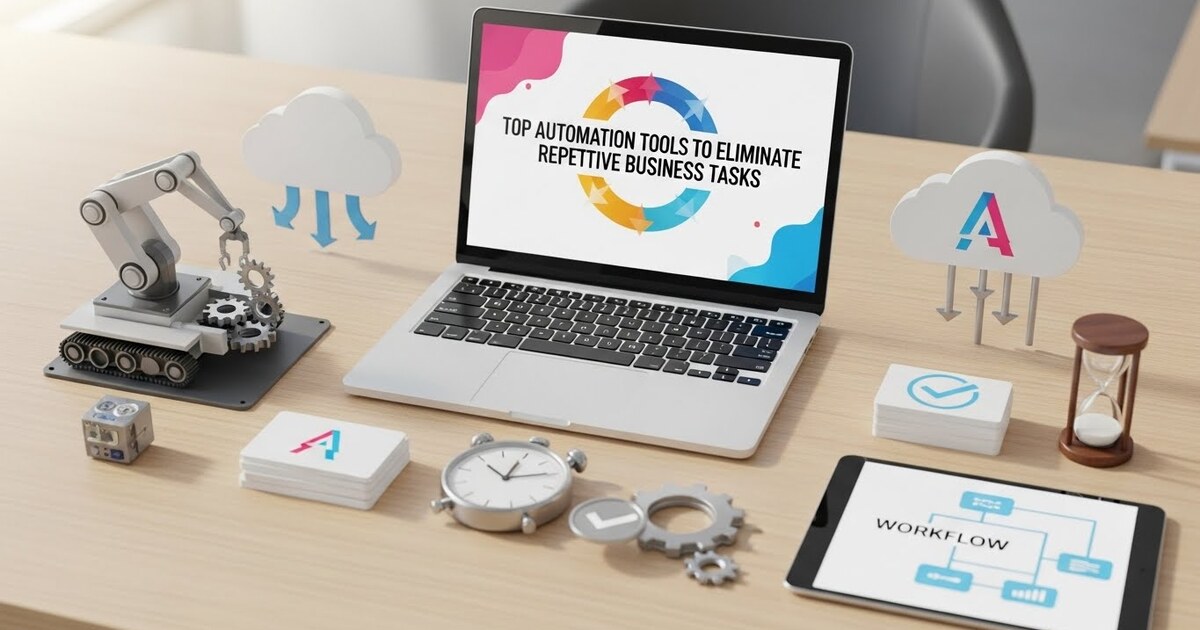
In the relentless engine of commerce, a quiet revolution is underway. It is not happening on factory floors with robotic arms, but within the digital workflows of businesses large and small. This revolution is powered by automation tools, the silent workforce that operates tirelessly in the background, executing the repetitive, predictable tasks that have long consumed the hours and mental energy of entrepreneurs and employees alike. The promise of these tools is profound: to systematically eliminate the mundane, freeing human creativity and strategic thought to focus on what truly drives growth and innovation. This is not about replacing people, but about empowering them with digital allies. The modern business that ignores this shift does not merely work harder; it works at a permanent and growing disadvantage. This guide explores the top categories of automation tools, illustrating how they can be strategically deployed to create a business that is more efficient, more resilient, and fundamentally more human in its focus.
The Connective Tissue: Integration and Workflow Platforms
Before specific tasks can be automated, a foundation must be laid. The most powerful automation tools are those that act as universal translators and connectors between the other software you use daily.
Zapier
Often called the digital glue of the modern web, Zapier allows applications that do not natively speak to each other to share data and trigger actions. It works on a simple principle: “When This happens in App A, then do That in App B.” These automated sequences are called Zaps. For example, you can create a Zap that automatically adds new email subscribers from Mailchimp as contacts in your Salesforce CRM, or one that saves Gmail attachments directly to a specific Dropbox folder. With thousands of supported apps, Zapier’s true power is in creating custom, interconnected workflows that span your entire digital toolset, turning a collection of apps into a single, coherent system.
Make
A more visual and powerful alternative, Make (formerly Integromat) operates on a similar principle but with a greater emphasis on complex, multi step workflows. Its interface uses a flowchart style designer, allowing you to build intricate automations that can route data, perform actions based on multiple conditions, and handle errors gracefully. Where Zapier excels at simple, linear connections, Make is the tool for building sophisticated, branching automations that can transform entire business processes.
IFTTT
Standing for “If This Then That,” IFTTT is often seen as the consumer friendly cousin of the above, but it holds significant utility for business. It is exceptionally strong at automating interactions with social media, smart devices, and web services. Automatically posting new blog entries to LinkedIn, backing up photos from social media to cloud storage, or logging business mileage from your phone’s location data are all simple, set and forget automations possible with IFTTT.
The Communication Command Center
Communication is the lifeblood of business, yet managing its flow is a notorious time sink. Automation tools here act as intelligent gatekeepers and responders.
Email Automation with Tools Like Mailchimp and ActiveCampaign
Beyond batch newsletters, modern email platforms are engines for behavioral automation. You can build “welcome series” that automatically nurture a new subscriber over seven days, or “abandoned cart” sequences that remind a potential customer to complete a purchase. More advanced tools like ActiveCampaign or HubSpot allow for incredibly nuanced automation based on user behavior: if a contact clicks a link about a specific product, they can be automatically tagged and sent more relevant information later, creating a hyper personalized communication journey without manual intervention.
Chatbot Builders: ManyChat and Chatfuel
For immediate, front line communication, chatbots are unparalleled. Platforms like ManyChat for Facebook Messenger or Chatfuel allow you to build automated conversational flows to answer frequently asked questions, qualify leads, schedule appointments, or even process simple orders directly within messaging apps. This provides 24/7 service and captures information that can be seamlessly passed to a human agent or your CRM, ensuring no opportunity is missed after hours.
Calendar and Scheduling: Calendly and SavvyCal
The ritual of “finding a time” is a universal drain. Scheduling tools automate this entire exchange. By connecting to your calendar, they display your real time availability via a personalized booking link. A client picks a time, the event is automatically added to both calendars, and relevant details (like a Zoom link or intake form) are sent without a single back and forth email. This reclaims hours per week previously lost to administrative tennis.
The Operational Engine: Automating Internal Processes
These tools focus on the internal machinery of a business, streamlining operations from data entry to project management.
Document and Contract Automation: PandaDoc and DocuSign
Creating proposals, contracts, and other routine documents from scratch is inefficient. Tools like PandaDoc allow you to build templates with dynamic fields. When you need a new proposal, you simply fill out a web form, and the tool automatically generates a perfectly formatted, personalized document, populating client names, dates, prices, and terms. When signed via integrated e signature platforms like DocuSign, the executed copy is automatically filed and stored, completing the cycle without printing, scanning, or manual filing.
Accounting and Finance: QuickBooks Online and Dext
Financial automation is transformative. Modern accounting software connects directly to bank feeds, importing and categorizing transactions automatically using rules you set. Tools like Dext (formerly Receipt Bank) take this further: simply forward a receipt email or snap a photo with your phone, and Dext will extract the key data (vendor, date, amount, tax) and push it into your accounting software, eliminating manual data entry. Invoicing can be automated with recurring billing, and late payment reminders can be sent automatically, creating a near autonomous financial backend.
Project Management: Asana and Trello with Automation
Project management tools are no longer just digital to do lists. Their built in automation features, called “Rules” in Asana or “Butler” in Trello, can handle routine project chores. For example, you can set a rule so that when a task is marked complete in a “Client Deliverables” project, it automatically moves a card in Trello to an “Awaiting Feedback” list and assigns it to the client. Or, a rule in Asana can automatically assign a new task to a team member based on the project it is filed under, and set a due date for two days from creation. These small automations keep projects flowing without constant manager oversight.
The Marketing and Sales Conductor
Nurturing leads and engaging customers is a process ripe for automation, enabling personalized journeys at scale.
Customer Relationship Management (CRM) Automation: HubSpot and Salesforce
A modern CRM is the brain of sales and marketing automation. It can automatically score leads based on their interaction with your website and emails, moving promising leads to the top of a salesperson’s list. It can trigger internal notifications when a lead views a pricing page multiple times, signaling a sales call. Automated follow up sequences ensure no lead is forgotten, and detailed contact timelines are built automatically from every email sent and received, creating a comprehensive view of the customer without manual note taking.
Social Media Management: Buffer and Hootsuite
Consistency is key in social media, but daily posting is a distraction. These tools allow for bulk scheduling. You can dedicate one afternoon a month to creating and uploading content, then use the scheduler to automate its publication across all platforms at optimal times. Some tools also offer automated “re sharing” of your best performing content and basic analytics reporting, turning social media from a daily chore into a strategic, batch processed operation.
The Intelligence and Analytics Assembler
Automation is not just about action; it is also about insight. These tools automate the collection and presentation of data.
Data Aggregation and Reporting: Google Data Studio and Power BI
Business owners often waste time logging into multiple dashboards. Tools like Google Looker Studio (formerly Data Studio) or Microsoft Power BI can connect directly to your data sources Google Analytics, your CRM, your advertising platforms. You then build a one time custom dashboard that pulls all key metrics into a single, visually coherent report. This dashboard can be scheduled to email a PDF snapshot to stakeholders every Monday morning, automating the entire reporting cycle and providing consistent, timely insight without manual compilation.
Research and Monitoring: Google Alerts and Talkwalker
Staying informed about industry news, brand mentions, or competitor activity can be automated. Setting up Google Alerts for specific keywords means relevant articles are delivered to your inbox automatically. More advanced social listening tools like Talkwalker or Mention can monitor the web and social media for conversations about your brand or industry, sending you daily or weekly digests. This creates a passive, always on intelligence gathering system.
Implementing Your Automated Workforce
Adopting these tools requires a strategic, not a scattershot, approach. Begin with the task that causes the most obvious weekly frustration, the “I wish I didn’t have to do this again” chore. Often, this is email management, scheduling, or expense tracking. Master one automation in that area before adding another. The goal is not to achieve 100 percent automation, but to achieve 100 percent focus on the work that truly requires a human touch: creative strategy, complex problem solving, and genuine relationship building.
The ultimate value of these top automation tools lies not in the minutes they save on a single task, but in the collective hours they return to your organization. They reduce errors born of boredom, ensure consistency in customer experience, and allow businesses to scale processes without linearly scaling overhead. By deploying this silent workforce, you are not just optimizing your business; you are fundamentally redefining it. You are shifting your most valuable asset your human talent from being processors of routine to being architects of the future. In the end, the greatest automation of all is the automation of opportunity, freeing you and your team to do the work that only you can do.