The Great Unraveling: Untangling Busyness to Discover True Productivity

In the modern world, busyness has become a cultural totem, a quiet boast woven into our greetings and our social media posts. We wear our full calendars and our late nights like medals of honor, conflating motion with progress, and activity with achievement. Yet, beneath this veneer of industriousness, a quiet anxiety often hums. It is the feeling of running faster and faster on a treadmill, breathing hard, expending tremendous energy, yet never actually arriving anywhere. This is the chasm between being busy and being productive.
Busyness is about doing many things. Productivity is about doing the right things the things that create meaningful forward momentum. To cross this chasm requires not more effort, but a profound unraveling of our habits, our mindset, and our very definition of work. It is a journey from fragmentation to focus, from reaction to intention.
The Diagnosis: Distinguishing the Virus of Busyness
The first step in curing a malaise is to recognize its symptoms. Busyness is not merely having a lot to do; it is a specific, often self perpetuating state characterized by several clear markers.
Busyness is reactive. Your day is dictated by the influx of other people’s demands: the ping of a message, the chime of a new email, the “quick question” from a colleague. Your agenda is set by external forces, leaving you in a constant state of response, never of creation.
Busyness is fragmented. It is characterized by constant context switching. You are drafting a report, then checking Slack, then answering a call, then back to the report, then attending a meeting with no clear agenda. Each switch carries a cognitive “tax,” depleting your mental reserves and ensuring that no single task receives your full, capable attention.
Busyness is visible, often theatrical. It values the appearance of effort long hours, rapid fire typing, a frazzled demeanor over the substance of outcome. It is easy to mistake this visibility for virtue.
Busyness is often purposeless. At the end of a busy day, you may have crossed twenty items off a list, but when asked what you accomplished, you struggle to name anything of substance. The tasks were completed, but they did not contribute to a larger, meaningful goal. They were mere maintenance, not advancement.
True productivity, in contrast, is quiet, focused, and intentional. It is defined by outcomes, not activities. A productive day ends with a clear answer to the question: “What meaningful progress did I make toward my most important objective?” The shift from the former to the latter is the essence of this great unraveling.
The Foundational Mindshift: From Motion to Meaning
The unraveling begins in the mind. You must consciously reject the cult of busyness and redefine your personal metric of a successful day. This requires embracing a potentially uncomfortable truth: Doing less is often the prerequisite for achieving more.
This is the principle of leverage. Not all tasks are created equal. Some activities, perhaps 20% of what you do, generate 80% of your desired results. The goal is to ruthlessly identify that high leverage 20% and pour your finest energy into it, while systematically minimizing, delegating, or eliminating the remaining 80%. This means that a productive day might see only three significant tasks completed, but those tasks will have moved a key project forward in a way that fifty smaller tasks never could.
To operationalize this, you must begin each day, week, and month by defining what “meaning” looks like. What is the one most important goal for this period? What does “productive” concretely mean for you right now? Is it finalizing the client proposal, completing the product prototype, or defining the new marketing strategy? Until you name the meaningful outcome, you are vulnerable to the siren call of mere busyness.
The Strategy of Radical Prioritization: The One Thing Rule
With your mind oriented toward meaning, you need a practical filter for your daily work. The most powerful tool is a simple, relentless question, popularized by Gary Keller: “What is the ONE Thing I can do, such that by doing it, everything else becomes easier or unnecessary?”
This question is a scalpel. It cuts through a crowded to do list and exposes the vital few. Each morning, before you open your email or attend a meeting, you must answer this question for your day. The answer becomes your Most Important Task (MIT). This is the single non negotiable activity that constitutes a productive day, regardless of what else happens.
You then defend this task with monastic focus. Schedule it for your peak energy period, usually first thing in the morning. During this time, you close all other applications, silence notifications, and create a fortress of concentration. You do not check messages; you do not take calls. You work on your One Thing until it reaches a defined state of completion. The psychological power of this practice is immense. It ensures that every single day contains a core of undeniable, meaningful progress. Busyness cannot claim a day in which your One Thing is done.
The Architecture of a Protected Day: Time Blocking as a Philosophy
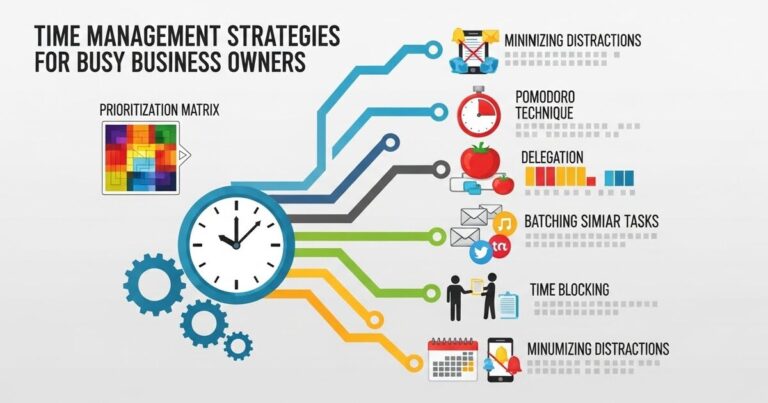
A single prioritized task, however, can still drown in a sea of incoming demands. To prevent this, you must move from managing tasks to managing your time itself. This is the practice of time blocking. It is not merely a calendar trick; it is a philosophical stance that your focus is your most valuable asset and it must be scheduled and guarded.
Do not use your calendar only for meetings with others. Use it to schedule meetings with your work. Block out time for your One Thing. Block out time for deep work on other important projects. Block out time for processing communication (email, messages) in specific, limited batches perhaps 30 minutes at 11 AM and 4 PM. Block out time for administrative tasks. Even block out time for breaks and strategic thinking.
Your calendar should become a mosaic of colored blocks representing different types of work. This visual plan transforms your day from an empty field where any demand can wander in, into a carefully cultivated garden. When a new request arrives, you consult the garden’s plan. “I have an opening for that type of work at 2 PM tomorrow,” you can say, rather than abandoning your priorities to react immediately. Time blocking is the structural embodiment of intention, creating literal space for productivity to flourish.
The Discipline of Intentional Neglect: The Power of “No” and “Not Now”
Busyness thrives on an inability to decline. Productive people are not those who do everything asked of them; they are those who skillfully and gracefully avoid tasks that do not align with their key goals. Saying “no” is not a negation of helpfulness; it is an affirmation of your existing commitments.
Develop scripts for polite but firm deflection. “That project sounds fascinating. My plate is completely committed to [Your One Thing] this quarter, so I wouldn’t be able to give it the attention it deserves.” Or, “I can’t take that on right now, but I can recommend someone who might be available.”
Equally important is the concept of “not now.” Not every worthy idea must be acted upon immediately. Create a “Someday/Maybe” list a simple document or notebook where you capture interesting ideas, potential projects, or minor tasks that are not relevant to your current priorities. This gets them out of your head and off your immediate to do list, freeing your mental RAM to focus on what matters now. Review this list monthly during a dedicated planning session. Most things on it will lose their allure, proving they were distractions in the moment. The few that remain truly important can then be properly scheduled and resourced.
The System of Uninterrupted Focus: Taming the Digital Zoo
Our digital tools are the primary engines of busyness. They are designed to interrupt, to notify, to pull us into endless streams of shallow interaction. To be productive, you must domesticate this zoo.
Begin with a notification purge. Go into the settings of every app on your phone and computer and turn off all non critical notifications. The default setting of the modern world is “interrupt me.” You must change it to “I will decide when to engage.” Let your tools serve you, not command you.
Next, embrace single tasking on your devices. When working on your One Thing, close every browser tab and application not directly relevant to that task. Use full screen mode. If you need to research, do it in a dedicated batch later, not as a tangential click that spirals into an hour of lost focus. Consider using website blockers during your deep work sessions to prevent habitual visits to social media or news sites.
Your phone, the most potent busyness device ever created, should be physically distant during focused work. Place it in another room, or at least face down and on silent. The mere presence of a smartphone, studies show, reduces cognitive capacity. You are not merely avoiding interruptions; you are preserving the quality of your thought.
Also Read: Productivity Tools That Help Small Teams Get More Done
The Ritual of Review and Renewal: Closing the Loop
Productivity is not a frantic sprint; it is a sustainable pace. It requires regular periods of review to learn, and of renewal to refuel.
Institute a Weekly Shutdown Ritual. At the end of each work week, spend 30 minutes to an hour processing the week. Clear your inbox and your physical desk. Review your accomplishments and your calendar. Ask yourself: Did my activities align with my goals? What was my biggest distraction? What went well? Then, write down your top 3-5 priorities for the coming week and schedule your time blocks. This ritual closes the psychological loop on the past week, allowing you to truly rest, and provides a clear map for the next, preventing the Sunday night scaries and Monday morning ambiguity.
Furthermore, you must schedule real renewal. Busyness glorifies burnout. Productivity requires energy. You cannot be focused and intentional if you are perpetually exhausted. Defend your sleep, your exercise, your meals, and your time for hobbies and relationships with the same vigor you defend your time blocks. These are not indulgences; they are the maintenance required for your human machinery to perform at its peak. A walk in nature, a period of quiet reading, or time with loved ones is not time away from productivity. It is the essential fuel for it.
The Journey from Fragmentation to Flow
The path from busyness to productivity is, therefore, a path of continual refinement. It is the daily practice of choosing meaning over motion, focus over fragmentation, and intention over reaction. It asks you to be the author of your day, not just a character in it.
Start small. Tomorrow morning, ask yourself the One Thing question. Block out 90 minutes to do it, with your phone in another room. Experience the profound satisfaction of completing meaningful work without interruption. From that kernel of focused achievement, build your systems: your weekly planning, your notification purge, your graceful “no.”
You will discover that productivity is not about doing more faster. Productivity is about doing better, with greater clarity and less strain. It is the quiet confidence that comes from knowing your energy is invested, not just spent. It is the unraveling of the frantic, tangled knot of busyness, revealing the clear, strong thread of purpose that was there all along. When you stop being busy, you finally create the space to start being something far more powerful: effective.