How to Create a Social Media Strategy for B2B (That Isn’t Boring)
Let’s be honest: The phrase “B2B Social Media” usually conjures up a very specific, very depressing mental image.
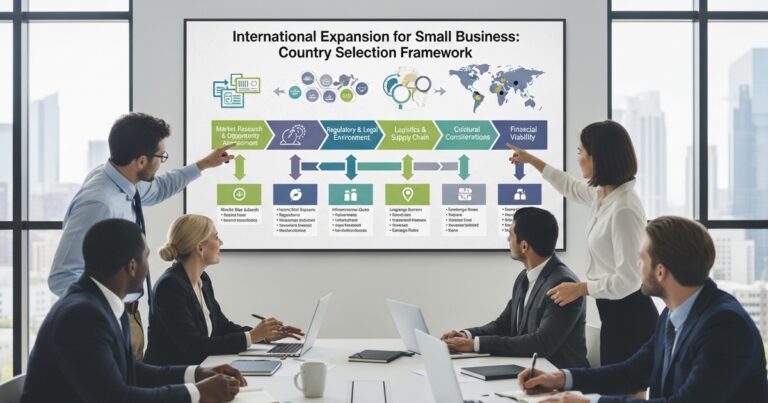
It looks like a stock photo of two men in blue suits shaking hands in front of a glass building. It reads like a press release: “We are thrilled to announce our Q3 synergies leveraging scalable solutions.” It feels like a ghost town where the only engagement is from the company’s own employees, forced to click “Like” by HR.
If this describes your current feed, your strategy isn’t just boring; it is invisible.
In late 2026, the B2B buyer has changed. They are Millennials and Gen Z. They grew up on the internet. They can smell “corporate speak” from a mile away, and they hate it. They do not want to buy from a faceless logo; they want to buy from experts they trust.
The good news? You can be in the driest industry on earth supply chain logistics, commercial insurance, industrial HVAC and still have a magnetic social presence.
This guide is your roadmap to dismantling the “Business-to-Boring” mindset. We will build a social media strategy that prioritizes human connection, leverages the “Dark Social” funnel, and turns your company page into a media channel that actually drives revenue.
Phase 1: The Great Mindset Shift (B2B is Dead)
The first step in fixing your social media strategy is to stop thinking in terms of B2B (Business to Business). Businesses do not read tweets. Buildings do not watch videos. People do.
The H2H Revolution (Human to Human)
Your target audience might be a CTO or a Procurement Manager, but at 8:00 PM, they are just a person scrolling on their phone on the couch. They are bored. They are looking for insight, entertainment, or connection.
If your content is strictly “professional” (read: devoid of personality), you are competing with their friends, their hobbies, and Netflix. You will lose.
The New Rule: Your content must be as engaging as a B2C brand, but with the intellectual depth of a B2B expert.
The “Villain” Narrative
Boring brands talk about themselves. Exciting brands talk about the battle. Every B2B product solves a problem. That problem is the “Villain.”
- Boring: “Our cybersecurity software has 256-bit encryption.”
- Exciting: “Hackers are sleeping well tonight because your firewall is 5 years old. Here is how to wake them up.”
Identify the villain your customer is fighting (Inefficiency, Compliance Risks, Wasted Budget) and position your content as the weapon to defeat it.
Phase 2: Platform Strategy (Where to Fight)
You do not need to be everywhere. In 2026, B2B social media has consolidated around specific “watering holes.”
1. LinkedIn: The 24/7 Conference
This is non-negotiable. LinkedIn is no longer just a resume site; it is the primary news feed for the professional world.
- The Strategy: Treat your Company Page as a “Landing Page” (for social proof) and your Personal Profiles (Founders/Sales) as the “Megaphones” (for reach).
- The Content: Deep dives, carousel PDFs, industry hot takes, and company culture.
2. YouTube: The Library of Trust
B2B buyers research heavily before talking to sales. YouTube is the second largest search engine in the world.
- The Strategy: “How-To” content and long-form podcasts.
- The Content: “How to choose a CRM,” “The truth about supply chain costs,” “Case Study: How Client X saved $1M.”
3. X (formerly Twitter) & Threads: The Town Square
This is where news breaks. It is for real-time engagement and networking with journalists and peers.
- The Strategy: High velocity, low friction.
- The Content: Short threads, memes, reacting to industry news, and direct banter with other brands.
4. TikTok / Shorts: The Humanizer
Yes, even for “boring” industries.
- The Strategy: Show the messy, real side of the business.
- The Content: “Day in the life of a structural engineer,” “Weirdest thing we found in a shipping container,” “3 tips for procurement managers.”
Phase 3: The “Anti-Boring” Content Pillars
If you post links to your blog with the caption “Check out our latest post,” you are wasting your time. Platforms penalize links that take users off-site. You need “Zero-Click Content”content that delivers value right there in the feed.
Here are four content pillars that actually get engagement.
Pillar 1: The “Edutainment” Carousel
Data is boring. Visualized data is sexy. Take your whitepapers and complex data sets and turn them into a 7-slide PDF carousel for LinkedIn or Instagram.
- Slide 1: The Hook (e.g., “Why 40% of SaaS startups fail in Year 1”).
- Slide 2-6: The Data/Insight (Simple charts, big text).
- Slide 7: The Takeaway.
Pillar 2: The “Contrarian” Take
Safe opinions get zero engagement. To build a tribe, you must be willing to alienate people who aren’t your ideal customer.
- The Prompt: What is a “best practice” in your industry that is actually garbage?
- Example: A hiring agency posting, “Resumes are dead. Here is why we stopped looking at them.”
- Why it works: It triggers debate. Debate triggers the algorithm.
Pillar 3: “Build in Public” (Behind the Curtain)
B2B buyers are skeptical. Transparency breeds trust. Show the process, not just the result.
- The Content:
- Screenshots of a Slack conversation solving a client crisis.
- A video of the product failing during a test (and how you fixed it).
- A photo of the warehouse team packing a massive order.
- The Message: “We are real people doing real work.”
Pillar 4: Meme Marketing (Used Carefully)
Memes are the universal language of the internet. Used correctly, they show industry insiders that “we get it.”
- Example: An accountant using a funny meme about “Tax Season stress.”
- The Rule: The meme must be relatable specifically to your niche. If you use a generic meme, it looks like “fellow kids.” If you use a niche-specific meme, it builds camaraderie.
Phase 4: Employee Advocacy (The Secret Weapon)
Here is a hard truth: People trust people 10x more than they trust brands. If your strategy relies entirely on the brand logo posting, you are fighting with one hand tied behind your back. You need to activate your Subject Matter Experts (SMEs).
The “Faces of the Brand” Program
Your engineers, sales reps, and customer success managers are your biggest assets.
- The CEO/Founder: Must post about vision, culture, and high-level industry trends.
- The Sales Team: Should not post “Buy now.” They should post “Here is a problem I helped a client solve today.”
- The Tech/Product Team: Should post about the “How”the nerdy details that prove competence.
Action Step: Create a “Social Media Hygiene” workshop. Teach your team how to optimize their LinkedIn profiles. Give them “permission” to post during work hours. Provide them with pictures and ideas, but let them write the captions in their own voice.
Phase 5: The “Dark Social” Distribution Strategy
Attribution software is broken. It will tell you that a lead came from “Direct Traffic” or “Google Search.” In reality, that lead likely heard about you on a podcast, saw a screenshot of your LinkedIn post in a Slack group, or was forwarded your newsletter.
This is Dark Social.
How to Win Dark Social:
You cannot track it, but you can fuel it.
- Goal: Create content so good that people want to share it privately.
- The Tactic: Stop gating everything.
- Old B2B: “Fill out this form to read our report.” (High friction, low sharing).
- New B2B: “Here is the entire report un-gated as a PDF. Download it and send it to your boss.” (Zero friction, high sharing).
When you give away your best information for free, your content circulates in private WhatsApp groups and Slack channels where the real buying decisions happen.
Phase 6: Engagement (Don’t Post and Ghost)
Social media is a two-way street. Most B2B brands treat it like a billboard (one-way). Your “Comment Strategy” is just as important as your “Content Strategy.”
The 15-Minute Rule
After you post, stay online for 15 minutes. Respond to every comment. This signals to the algorithm that the post is sparking conversation.
Outbound Engagement
Don’t just wait for people to come to you. Go to them.
- Identify 10 “Influencers” or prospective clients in your niche.
- Ring the “Bell” on their profiles to get notified when they post.
- Leave a thoughtful, non-salesy comment on their posts.
- Bad Comment: “Great post! Check us out.”
- Good Comment: “Interesting point about supply chain delays, Dave. We’ve noticed that warehousing is actually the bottleneck in Q4, not shipping.”
- Result: Their audience sees your smart comment and clicks your profile.
Phase 7: Measuring Success (Beyond Vanity Metrics)
If you report “Likes” to your CEO, they will roll their eyes. You need to map social metrics to business outcomes.
The Metrics That Matter:
- Engagement Rate: Are people talking? (Comments/Shares > Likes).
- Profile Visits: Are people moving from the feed to your “storefront”?
- Qualitative Feedback: “I see you guys everywhere.”
- The “Self-Reported Attribution” Field: On your “Book a Demo” form, add a text box: “How did you hear about us?”
- You will be shocked at how many people say “I saw your CEO’s post on LinkedIn” or “I follow you on Twitter.” This is data Google Analytics will never show you.
Conclusion: Be The “Purple Cow”
In his book Purple Cow, Seth Godin argues that the only way to survive is to be remarkable. In a field of black and white cows (boring B2B companies), be the purple one.
B2B does not have to mean boring. It just means the purchase is higher stakes. That is more reason to build trust, more reason to show personality, and more reason to be human.
Your 24-Hour Action Plan:
- Audit your bio. Remove “World-class solutions provider” and replace it with what you actually do.
- Post one “Zero-Click” value piece (a tip, a list, or a chart) with no link to your website.
- Comment on 5 posts from industry peers.
Stop trying to sound like a corporation. Start sounding like the smartest person in the room who is also fun to have a beer with. That is how you win B2B social media in 2026.
Frequently Asked Questions (FAQ)
Q: How often should we post?
A: Consistency beats frequency.
- LinkedIn: 3-5x per week.
- Twitter/X: 2-5x per day.
- Video (Shorts/Reels): 2-3x per week.
- It is better to post 3 times a week for a year than to post 10 times a week and burn out in a month.
Q: Should we use AI to write our posts?
A: Use AI for ideation and formatting, never for voice.
- Good: “ChatGPT, give me 10 counter-intuitive ideas about cloud computing.”
- Bad: “ChatGPT, write me a LinkedIn post about cloud computing.” (This will sound robotic and boring).
- Your audience craves human perspective. AI cannot give a “hot take” based on experience; it can only regurgitate the average of the internet.
Q: What if our industry is highly regulated (Finance/Healthcare)?
A: You can still be engaging within compliance. Focus on Education and Culture. You might not be able to give specific investment advice, but you can post about “The history of the stock market” or “How our team stays productive.” Always run a “Safe List” of topics by your legal team first so you can move fast later.
Q: We don’t have a designer. How do we make visuals?
A: You don’t need a designer; you need clear communication.
- Canva: Use simple templates.
- Text-Only: On LinkedIn, text-only posts often outperform images because they look like a real person wrote them, not a marketing department.
- Screenshots: A screenshot of a chart or a tweet is often more “authentic” than a polished graphic.
Q: How do we convert followers into leads?
A: Do not sell in the feed. Sell in the DMs and the Bio.
- Build trust in the feed.
- When someone engages consistently, reach out: “Hey, loved your comment. We actually just released a deep dive on that topic, happy to send it over if you’re interested.”
- Treat social media as a lead nurturing device, not just a lead generation device.