Copywriting 101: The Psychology Behind Headlines That Get Clicks
David Ogilvy, the father of modern advertising, once famously said, “On the average, five times as many people read the headline as read the body copy. When you have written your headline, you have spent eighty cents out of your dollar.”
In the digital ecosystem of 2026, that eighty cents has likely inflated to ninety-nine. whether you are ranking a local service page, sending an email blast, or fighting for attention on social media, the headline is the gatekeeper. It is the single point of failure. If the headline fails, the content no matter how brilliant does not exist.
But what makes a person click? Is it luck? Is it random?
No. It is psychology.
This guide goes beyond basic “tips and tricks.” We are going to deconstruct the neurological triggers that force a human brain to stop scrolling and start reading. We will explore the delicate balance between SEO optimization and psychological persuasion, providing you with a masterclass to write headlines mechanics that drive Click-Through Rates (CTR).
Part 1: The Neuroscience of the Click
To write headlines, you don’t need to be a poet; you need to be a behavioral psychologist. The human brain is a cognitive miser it wants to conserve energy. It filters out 99% of the noise it sees. To penetrate that filter, your headline must trigger a specific psychological response.
1. The Curiosity Gap (Loewenstein’s Theory)
George Loewenstein of Carnegie Mellon proposed the “Information Gap Theory.” He argued that when we feel a gap between what we know and what we want to know, it creates emotional distress. We click to relieve that distress.
- Weak Headline:Tips for Better Plumbing Maintenance.
- Why it fails: It’s complete. There is no mystery. The brain assumes it knows what is inside (probably “fix leaks” and “clean drains”).
- Strong Headline:The One ‘Invisible’ Pipe Issue Destroying 40% of Local Homes (And How to Spot It).
- Why it works: “Invisible” creates mystery. “40%” adds specificity. The brain asks, “Is my home part of that 40%? What is the issue?” The only way to close the gap is to click.
2. The Negativity Bias
Evolution has wired humans to prioritize threats over opportunities. A rustle in the grass might be food, but it might be a lion. The brain pays more attention to the lion. In copywriting, fear of loss is often a stronger motivator than the promise of gain.
- Positive Angle:How to Save Money on Your Electric Bill.
- Result: Moderate interest. It sounds like work.
- Negative Angle:7 Signs Your HVAC Unit Is Inflating Your Energy Bill by $500/Year.
- Result: High interest. The user feels they are losing something right now. The click is a defense mechanism to stop the loss.
3. The Principle of Specificity
Ambiguity is the enemy of conversion. Vague promises trigger the brain’s “spam filter.” Specific numbers, on the other hand, signal credibility and tangible value.
- Vague: We Can Grow Your Business Fast.
- Specific:How We Added 14 Qualified Leads in 30 Days for a Local Dentist.
- Psychology: The number “14” feels real. “30 Days” gives a timeline. “Dentist” calls out a specific audience. The brain trusts specificity.
Part 2: The “Power Word” Ecosystem
Words are not created equal. Some words are placeholders; others are emotional triggers. In 2025, effective copywriters use a “Power Word” database to spice up bland SEO titles.
The 4 Categories of Power Words
- Fear Words (The “Stop” Sign):
- Mistake, Toxic, Dangerous, Warning, Risk, Avoid, Nightmare.
- Example: “The 3 Toxic Mistakes Ruining Your SEO Strategy.”
- Greed Words (The “Go” Sign):
- Double, Instant, Profit, Cheap, Bonus, Exclusive, Giveaway.
- Example: “How to Double Your Leads Without Spending a Dime on Ads.”
- Trust Words (The Safety Net):
- Proven, Certified, Official, Backed, Guaranteed, Authentic.
- Example: “The Scientifically Proven Method for Better Sleep.”
- Curiosity Words (The Tease):
- Secret, Confessions, Uncovered, Myths, Hidden, Strange.
- Example: “Confessions of a Seven-Figure Agency Owner.”
Pro Tip: Use power words sparingly. A headline like “WARNING: This Strange Secret Will Instantly Explode Your Profits!” reads like 2010 clickbait. It destroys trust. A better balance is: “Warning: Avoid These 3 Common SEO Mistakes to Protect Your Rankings.”
Part 3: The 5 Headline Formulas That Never Fail
Creative genius is overrated. Reliability is underrated. Professional copywriters rely on formulas because they are predictable. Here are the top five for 2025.
Formula 1: The “How-To” Without the “Pain”
This is the holy grail of service-based headlines. It promises a result while removing the objection (the hard work).
- Structure: How to [Desired Result] Without [Common Pain Point]
- Example: “How to Rank on Google Maps Without Buying Expensive Ads.”
- Example: “How to Renovate Your Kitchen Without Moving Out.”
Formula 2: The Numbered List (The Listicle)
The human brain loves order. It hates chaos. A number promises a structured, digestible, finishable experience.
- Structure: [Number] Ways/Tips/Secrets to [Benefit]
- Nuance: Odd numbers (7, 11, 21) tend to outperform even numbers, likely because they appear less “manufactured.”
- Example: “7 Painting Trends That Will Increase Your Home Value in 2025.”
Formula 3: The “Direct Call-Out”
Stop trying to appeal to everyone. Call out your exact audience to create a “Cocktail Party Effect”where you hear your name across a crowded room.
- Structure: [Audience]: [Promise/Warning]
- Example: “Homeowners in Florida: Why Your Insurance May Not Cover Hurricane Damage.”
- Example: “Real Estate Agents: Stop Wasting Money on Zillow Leads.”
Formula 4: The “Lesson Learned”
Storytelling is powerful. Framing your headline as a personal experience creates empathy and curiosity.
- Structure: What I Learned From [Experience] / How I [Result]
- Example: “What I Learned From Auditing 500 Construction Websites.”
- Example: “How I Recovered From a Google Core Update in 14 Days.”
Formula 5: The “Ultimate Guide”
This signals comprehensiveness. It tells the user, “This is the last article you will ever need to read on this topic.”
- Structure: The Ultimate Guide to [Topic]
- SEO Note: These headlines often attract backlinks because they imply a resource, not just a blog post.
- Example: “The Ultimate Guide to Local SEO for Plumbers (2025 Edition).”
Part 4: SEO vs. CTR (The Balancing Act)
Here lies the conflict: You need to write for the Robot (Google) and the Human (The Clicker).
- The Robot needs keywords to understand relevance.
- The Human needs emotion to take action.
The “Front-Loading” Technique
Google places more weight on words at the beginning of the title tag. Humans scan the first 3 words and the last 3 words.
- Bad: “You Really Need to Read This If You Want to Understand Local SEO.” (Keywords buried at the end).
- Good: “Local SEO Guide: How to Rank Higher in 2025.” (Keywords first, benefit second).
Title Tag vs. H1 Tag
In modern CMS platforms (like WordPress), your SEO Title (what shows in Google) and your H1 (what shows on the page) can be different.
- SEO Title (For the Search Result): Strict, keyword-focused, under 60 characters.
- Example: “Roof Repair Services in Austin | 24/7 Emergency Fixes”
- H1 Header (For the Page Visitor): More emotive, longer, conversion-focused.
- Example: “Fast, Reliable Roof Repair in Austin: We Fix Leaks Before They Cause Mold.”
Character Limits Matter
Google typically truncates titles after 55-60 characters (or 600 pixels). If your killer hook gets cut off, it’s useless.
- Truncated: “Why Your Local Rankings Dropped And The Secret Method To Fi…” (The hook is gone).
- Optimized: “Local Rankings Dropped? How to Fix It Fast (2025 Guide).”
Part 5: Industry-Specific Examples
Let’s apply these theories to specific industries to see how generic titles can be transformed into high-CTR magnets.
Industry: Home Services (Construction/Painting)
- Bland: Exterior Painting Services in Miami.
- Better: Miami Exterior Painters: Weather-Proof Your Home for 10 Years.
- Best: The “Ceramic” Paint Secret: Why Miami Homeowners Are Switching to This Coating. (Curiosity + Local relevance).
Industry: Real Estate
- Bland: Homes for Sale in Paphos.
- Better: Luxury Villas in Paphos: View Our New Listings.
- Best: 5 Underrated Neighborhoods in Paphos with High ROI Potential. (Greed/Investment angle + Specificity).
Industry: Legal/Professional Services
- Bland: Personal Injury Attorney.
- Better: Injured in a Car Accident? We Can Help.
- Best: Insurance Companies Don’t Want You to Know This Settlement Clause. (Us vs. Them / Enemy Narrative).
Part 6: Testing and Validation (Data Over Gut Feeling)
You cannot guess what will work. You must test. Even the best copywriters are often wrong about which headline will win.
A/B Testing Methodology
If you are running Google Ads, this is easy. Create two ads with identical descriptions but different headlines. Run them for 1,000 impressions.
- Headline A: Affordable Web Design for Small Business.
- Headline B: Website Design That Pays for Itself in 30 Days.
- The Winner: Likely B, due to the specific benefit.
The “Email Subject Line” Test
If you have an email list, test your blog headlines as subject lines before you publish the post. Send Headline A to 10% of your list and Headline B to another 10%. Whichever gets the higher Open Rate becomes the permanent title of your blog post.
Tools of the Trade
- CoSchedule Headline Analyzer: Scores your headline based on word balance (emotional, power, common, uncommon).
- Sharethrough: Analyzes headlines specifically for “impression” impact and engagement.
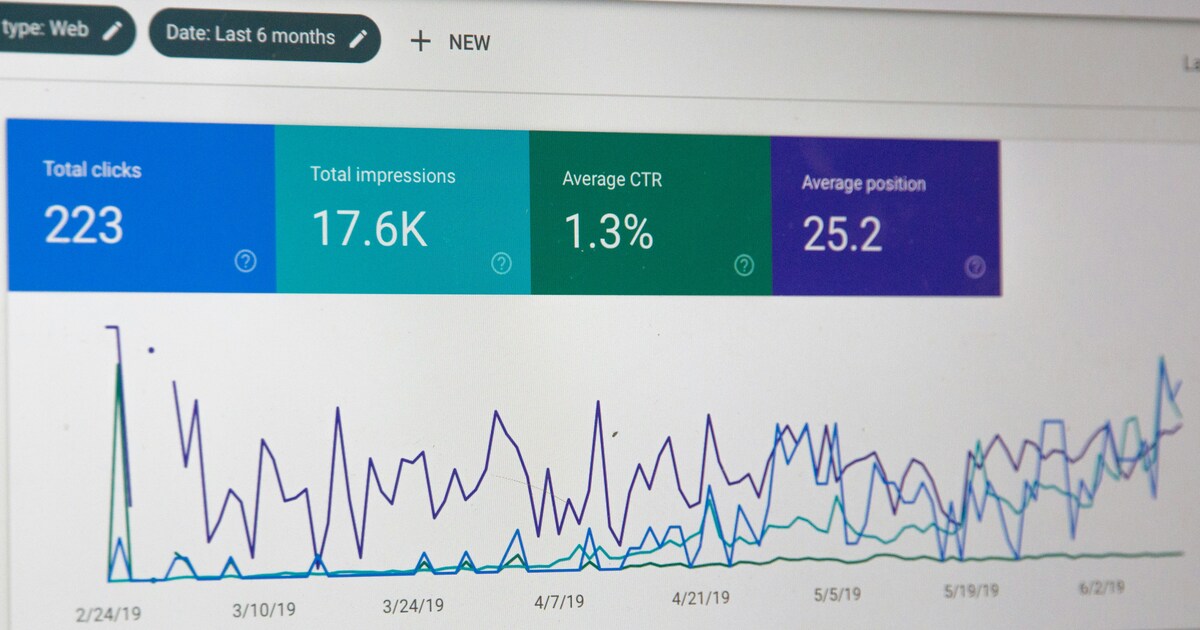
- Google Search Console: Check your actual CTR. If you are ranking #3 but your CTR is below 2%, your headline is the problem. Rewrite it.
Part 7: The Clickbait Trap (Ethical Warning)
There is a fine line between a “Click-Magnet” and “Clickbait.”
- Click-Magnet: Promises something exciting and delivers it in the content.
- Clickbait: Promises something exciting and fails to deliver.
The “Bounce Rate” Penalty: If you write a headline like “How to Get a Free House,” and the article is about applying for a mortgage, users will leave immediately (Bounce). Google tracks this. If users bounce quickly, Google assumes your content is irrelevant and will lower your rankings.
The Rule: Your headline is a contract. You must fulfill the terms of the contract in the first 200 words of the article. If you promise a “fast fix,” do not bury the solution at the bottom of a 3,000-word essay.
Conclusion
Great copywriting is not about tricking people; it is about respecting their attention. In a world of infinite scrolling, a good headline is a service to the reader. It tells them, “Hey, stop looking. The answer you need is right here.”
To master this, start practicing the “Rule of 25.” For every piece of content you write, force yourself to write 25 different headlines for it. The first 10 will be clichés. The next 10 will be creative. The last 5 will be gold.
Your Action Plan:
- Go to your Google Search Console.
- Filter for pages with high impressions but low clicks (CTR).
- Apply the “How-To Without Pain” or “Curiosity Gap” formula to those titles.
- Watch your traffic increase without writing a single new word of content.
Frequently Asked Questions (FAQ)
Q: How long should a headline be for SEO?
A: Ideally, keep it under 60 characters to avoid truncation in search results. However, for social media sharing (Facebook/LinkedIn), longer headlines (80-100 characters) often perform better because they can tell a fuller story.
Q: Do questions work as headlines?
A: Yes, but only if the question represents something the user is actually asking. “Do You Need a Plumber?” is a bad headline (too simple). “Is Your Water Heater About to Explode?” is a good headline (triggers anxiety/diagnostic mindset).
Q: Should I put my brand name in the title tag?
A: Generally, yes, but put it at the end. “Service Keyword | Secondary Benefit | Brand Name.” The only exception is if you are Nike or Apple, where the brand name is the search term. For local businesses, the service is more important than the brand name.
Q: What is a “Bracketed” headline?
A: This involves adding a clarifier in brackets at the end of the title, like [Video], [Checklist], or [Case Study]. Studies show that bracketed clarifications can increase CTR by up to 38% because they set clear expectations for the format of the content.